
Valensole Lavender Fields – Driving the Lavender Route in Provence
Every year, anticipation builds as the lavender fields of Provence start to gain their telltale purple glow. In summer, the region is awash with the sight and smell of lavender – it’s truly a spectacle not to be missed.
Among the most beautiful lavender fields are those on the Valensole Plateau. It’s here you’ll find endless stretches of fragrant rows peppered by stone huts and token trees, rolling across a landscape that feels almost impossibly picturesque.
The Valensole lavender fields are probably the most visited in all of Provence – and subsequently the most photographed. But getting the most out of your visit requires a little know-how, and that’s where I’m here to help.
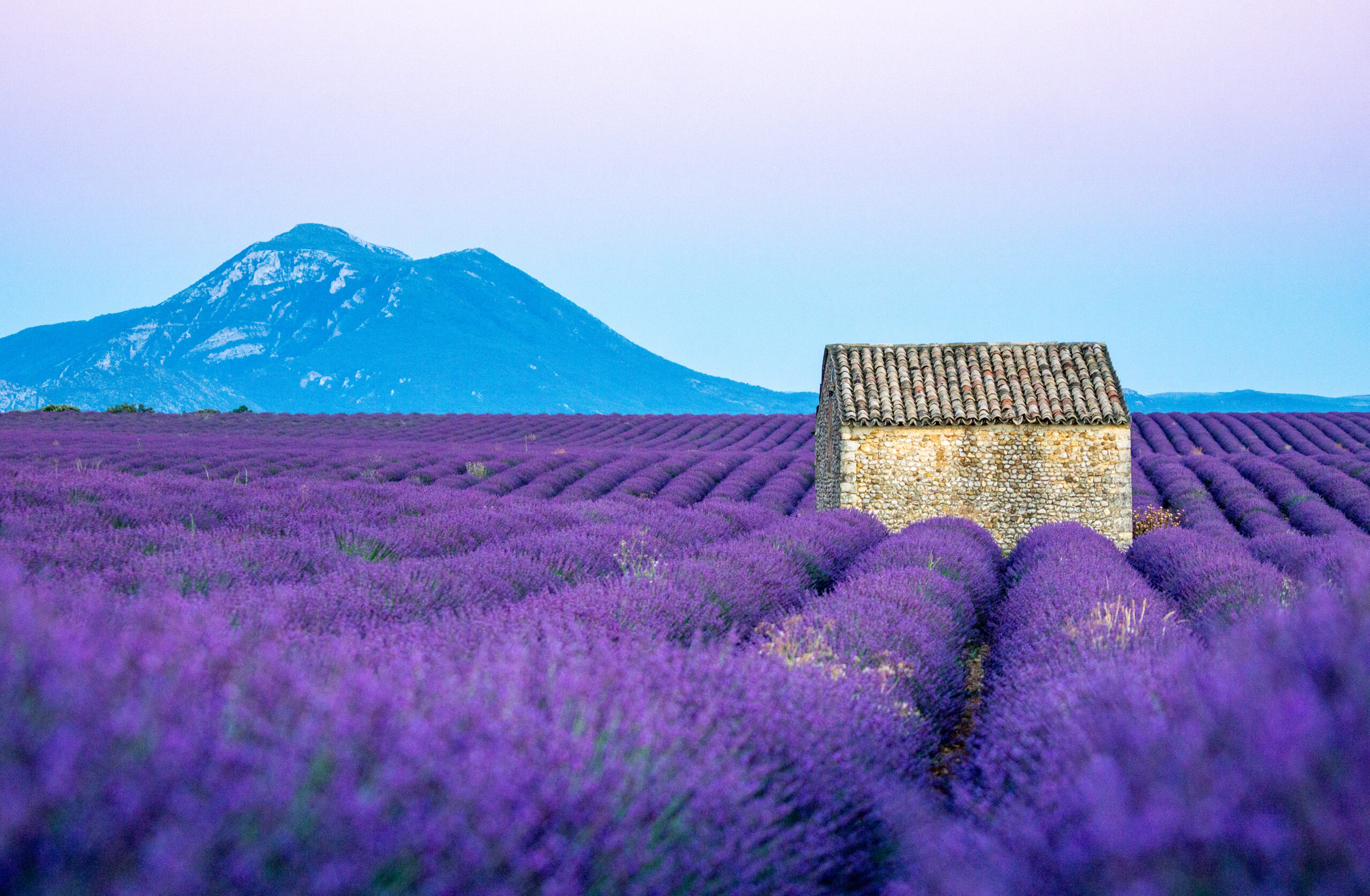
As someone who lived in Provence for almost a decade – and who still makes the trip back every summer – I know these roads well. However, crops get shifted around, sunflowers are swapped out for sage, and the landscape is constantly changing. So rather than pointing you just to specific fields that may not be perfect from one year to the next, I’ve put together a driving route through the best areas of the Plateau – one that lets you discover the finest fields for yourself, whatever the season brings.
Provence Lavender Fields
For a more comprehensive post about all things Provence lavender, please see this article. In it, I explain the best time to visit the lavender fields of Provence and the differences between the various lavender regions.
Related: Visiting the Luberon Lavender Fields of Provence, France
Valensole Lavender Route
This circular driving route covers the most scenic and lavender-rich roads on the Valensole Plateau, looping through the plateau’s best corridors, a pair of charming villages, and one of Provence’s most spectacular lake viewpoints. The whole circuit can be driven in a day, or stretched over two if you want to linger (and perhaps catch the best sunset/sunrise light).
If you’re coming from Aix-en-Provence, the Luberon, or Avignon, you’ll exit the A51 motorway at Manosque and head north to the plateau. The route begins almost immediately.
Here’s an overview of the full circuit before we dive in – it’ll give you a sense of the route and how the stops connect.
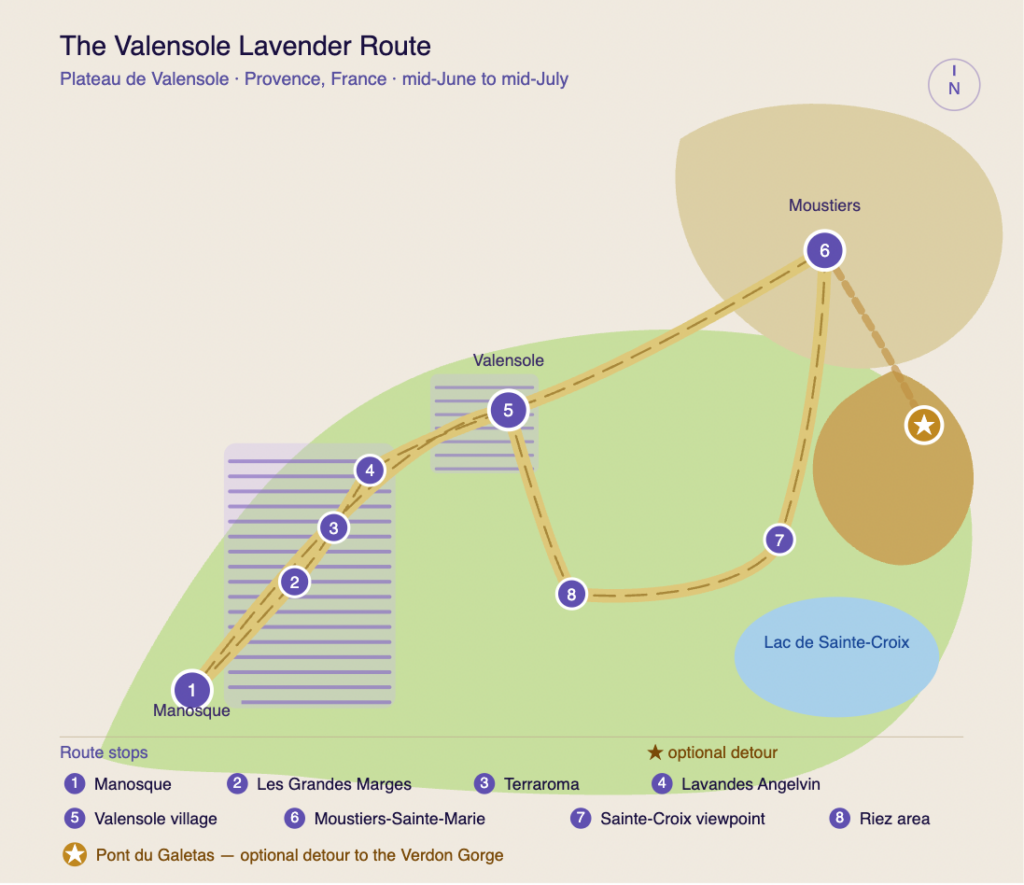
Segment 1 – The Manosque Approach: Route de Manosque (D6)
Starting point: Manosque (A51 exit) -> Lavandes Angelvin
The moment you leave the motorway behind and head north on the D6 (Route de Manosque), the plateau announces itself. This first corridor is one of the most rewarding stretches of the entire route, and you should plan to take your time.
The rolling fields along this road have it all.. Gentle slopes perfect for wide-angle shots, old olive groves tucked behind the lavender, and a scattering of sunflower fields thrown in for good measure. Keep your eyes peeled as you drive – there are plenty of places to pull off the road safely, just be aware of the traffic around you as you do so (I’ve seen too many near misses!).
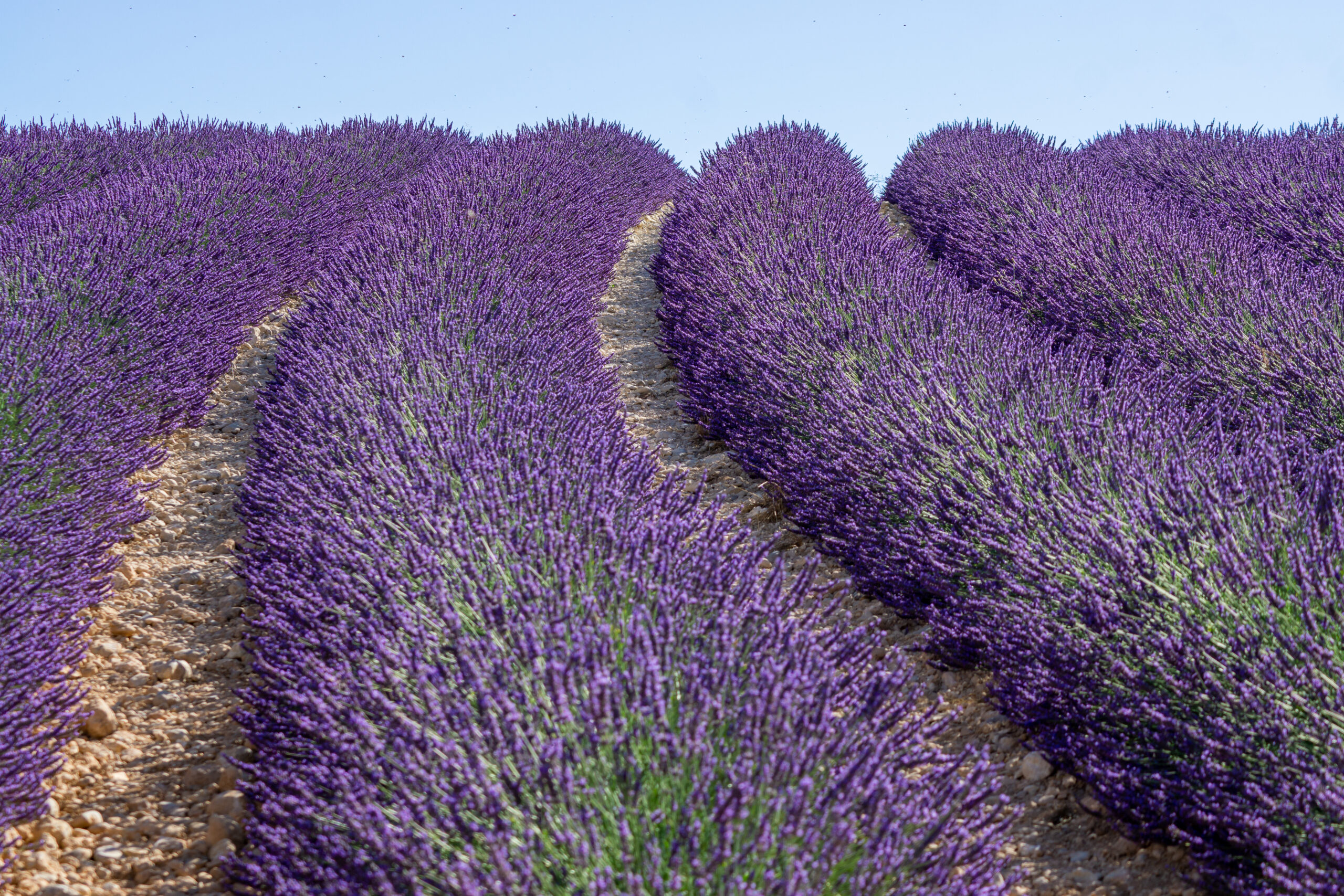
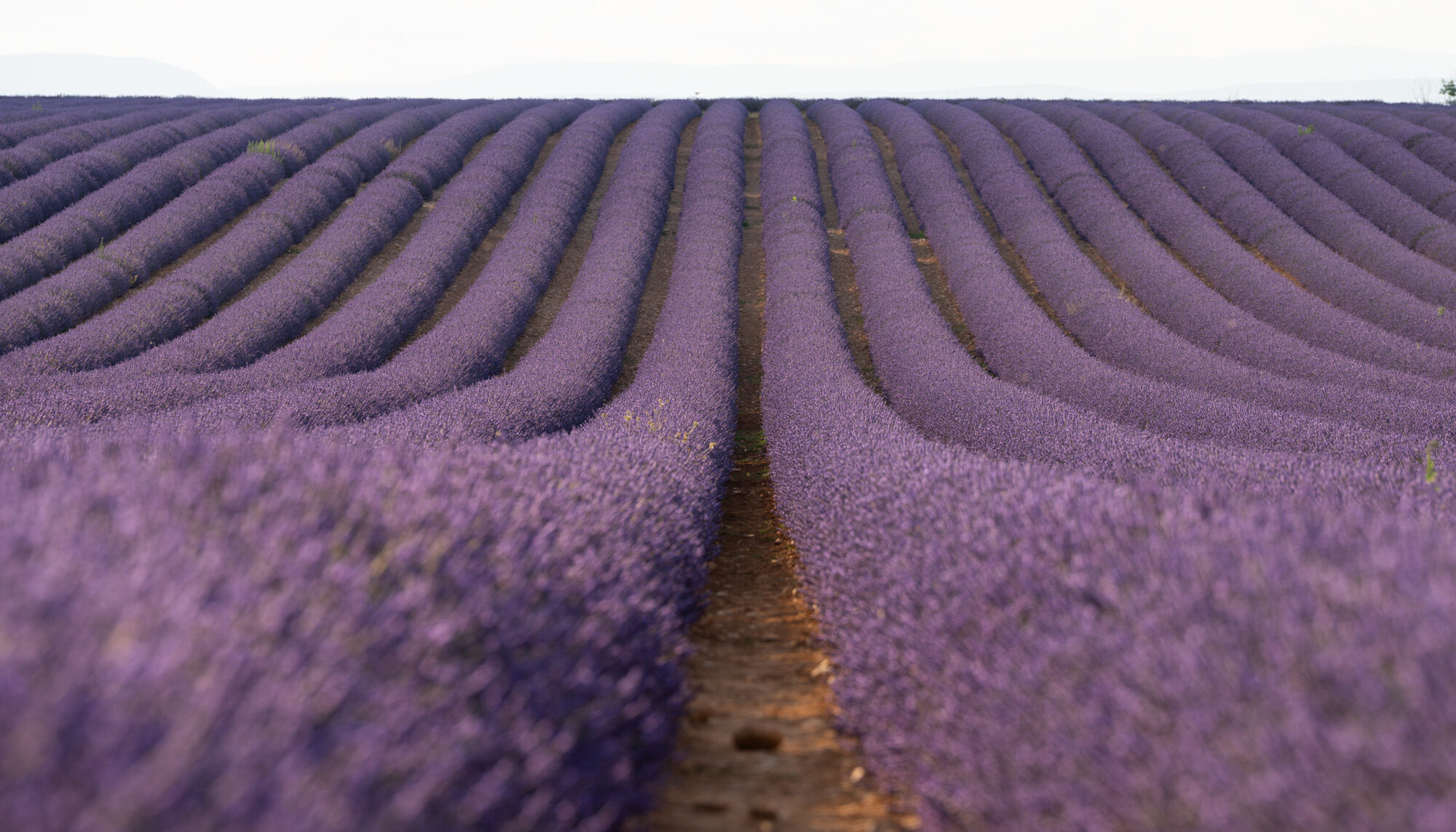
Before you reach the distilleries (listed below), this spot typically has beautiful curving fields of lavender that are quieter than some further along… And the fields opposite often have sunflowers.
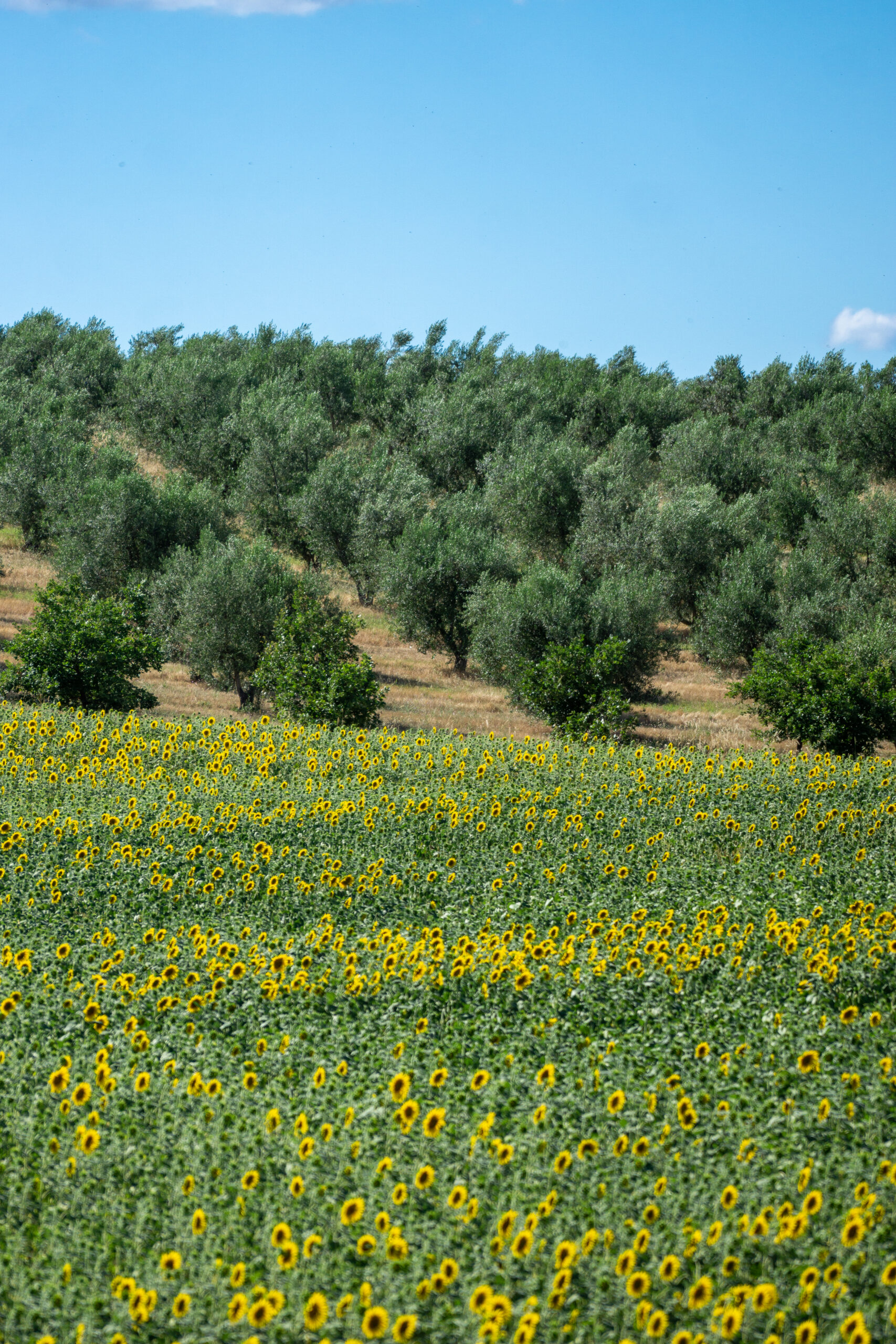
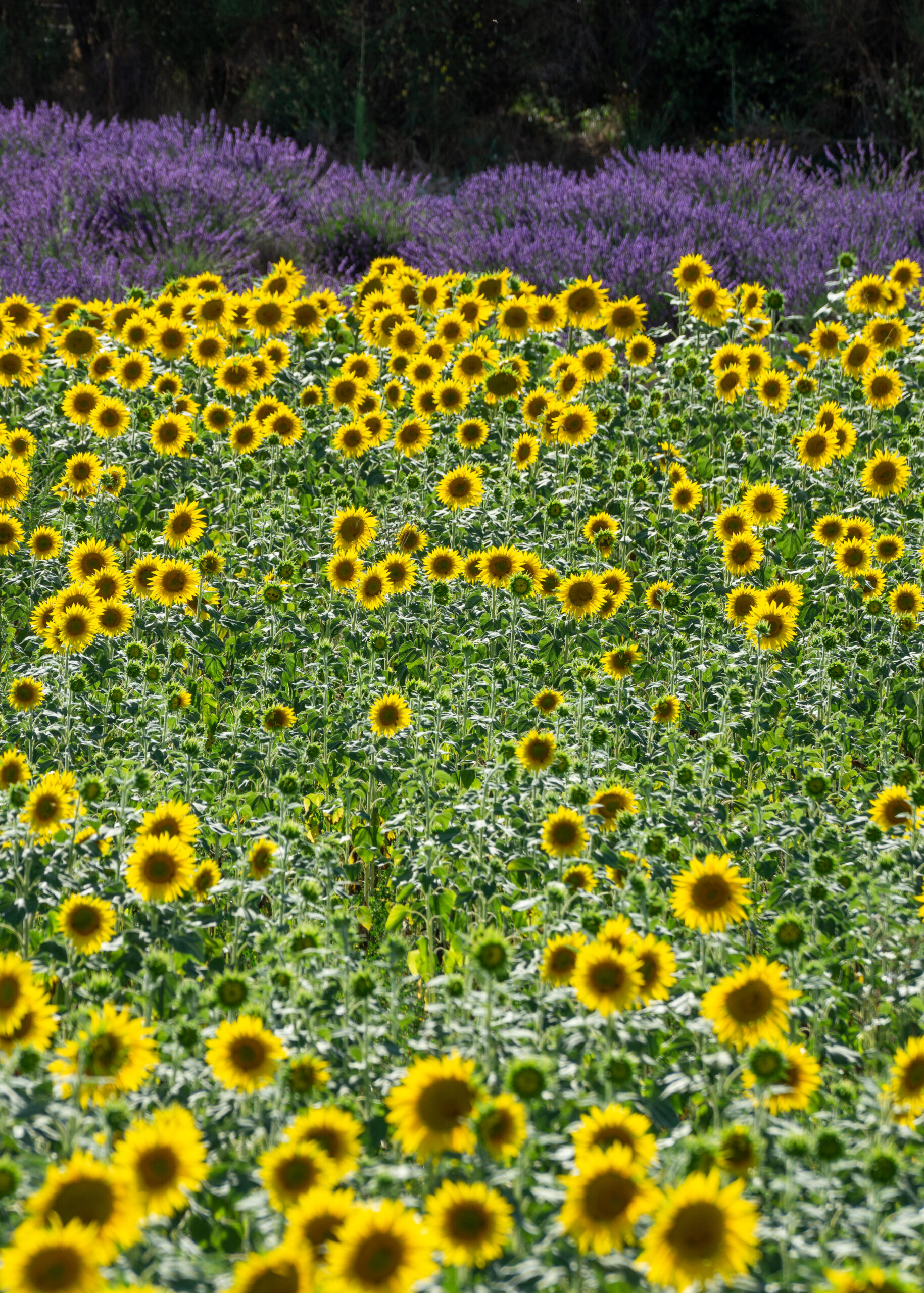
Once you’re done taking photos here, pop up to Les Grandes Marges, where you can sample the produce being grown, buy bottles of olive oil to take home, enjoy an ice cream, or pick up beautiful lavender products.
The Distilleries
Two well-known lavender distilleries sit along this stretch, and both are worth stopping at.
Because they want you to stop and shop, they most often have stunning, photogenic lavender fields in the immediate vicinity. They’ve also been known to leave a field uncut until later in the season.. So this is where to head first if you’re travelling to Valensole from mid-July.
Terraroma distillery is on the right-hand side of the road, but they own the lavender fields on both sides. Find it here.
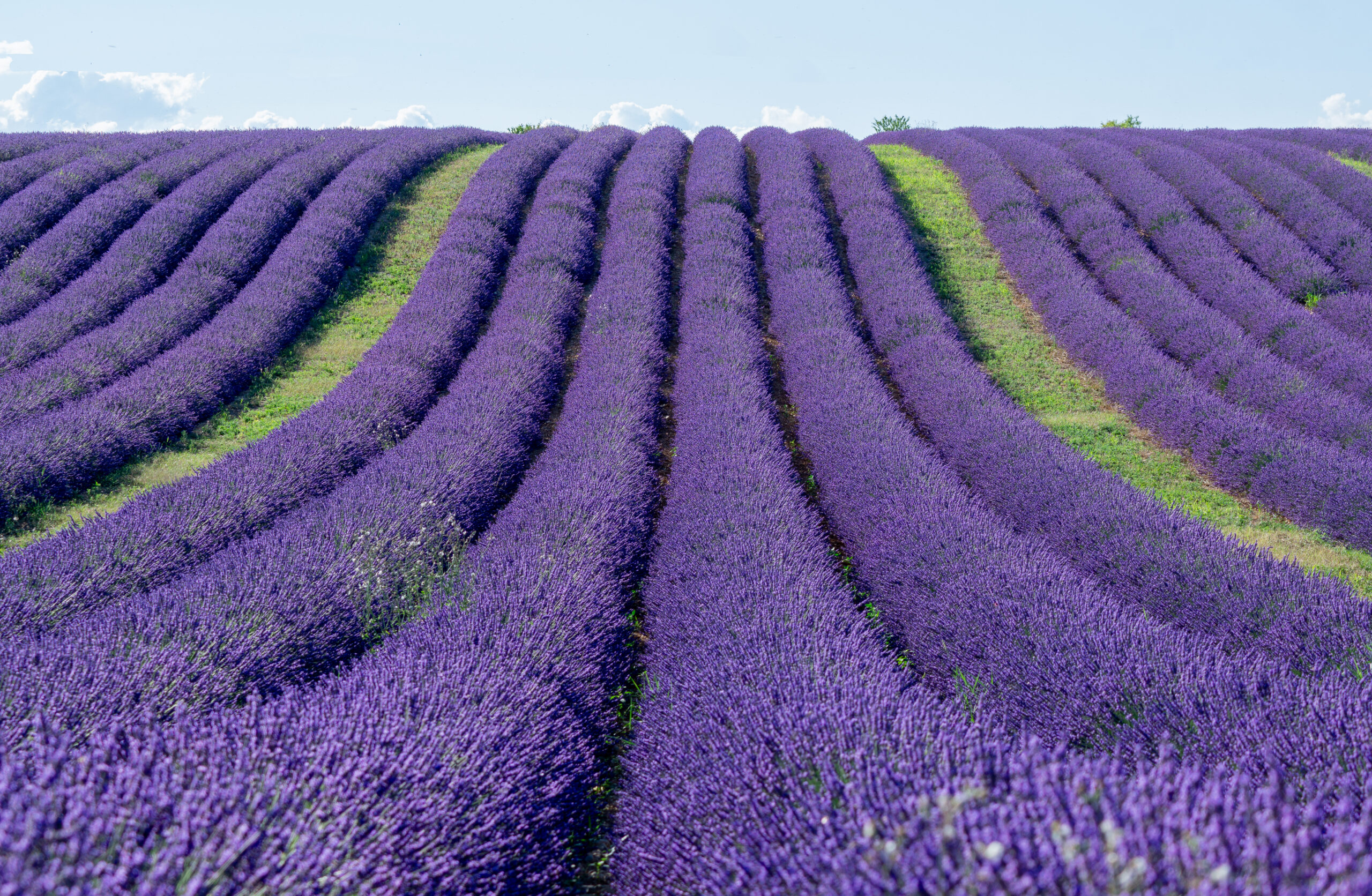
The rolling hills here are prime for photos, and there’s plenty of space for everyone to get their shot. In a stroke of clever marketing, there’s a rather large Hollywood-style Terraroma sign smack bang in the middle of the field, but it’s easy enough to work around it with angles, cropping, or just walking towards the far end of the field if you don’t want it in your shot.
The actual distillery is across the road, where you’ll park. So pop in and pick up some honey, essential oils, or a bunch of dried lavender for your photoshoot while you’re there!
From here, the fields merge into your next lavender spot, Lavandes Angelvin.
Lavandes Angelvin is on the left-hand side of the road. If you’ve visited Terraroma next door, you can just walk across to these fields, located here.
If you’re coming by car, there’s a small car park on your right as you approach. Park your car there and pick up some tasty treats from the roadside stall selling lavender-infused goodies.
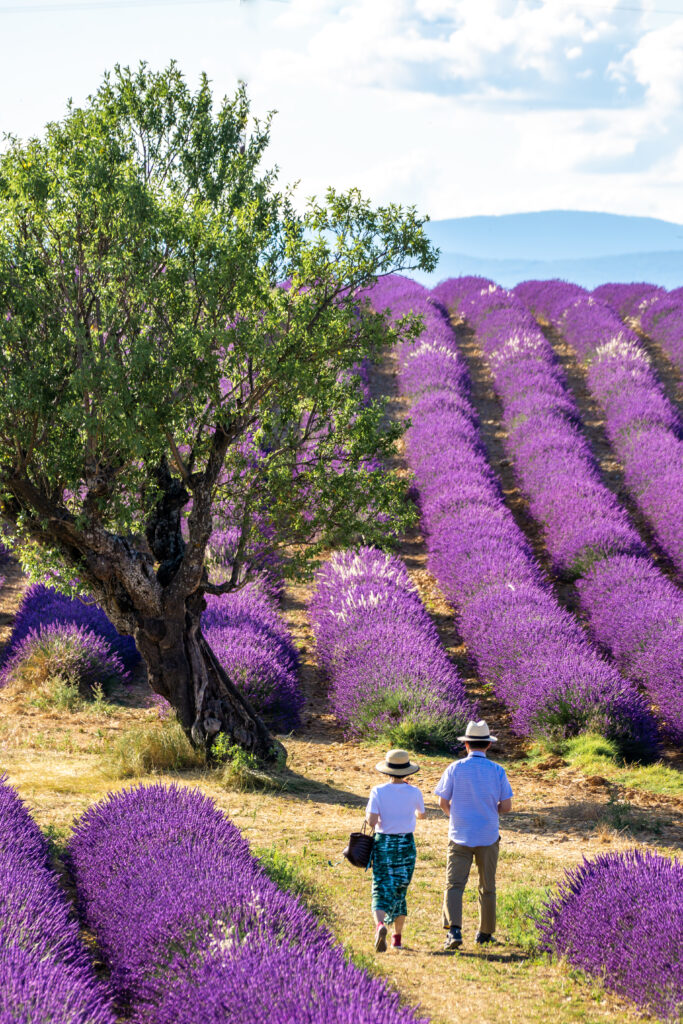
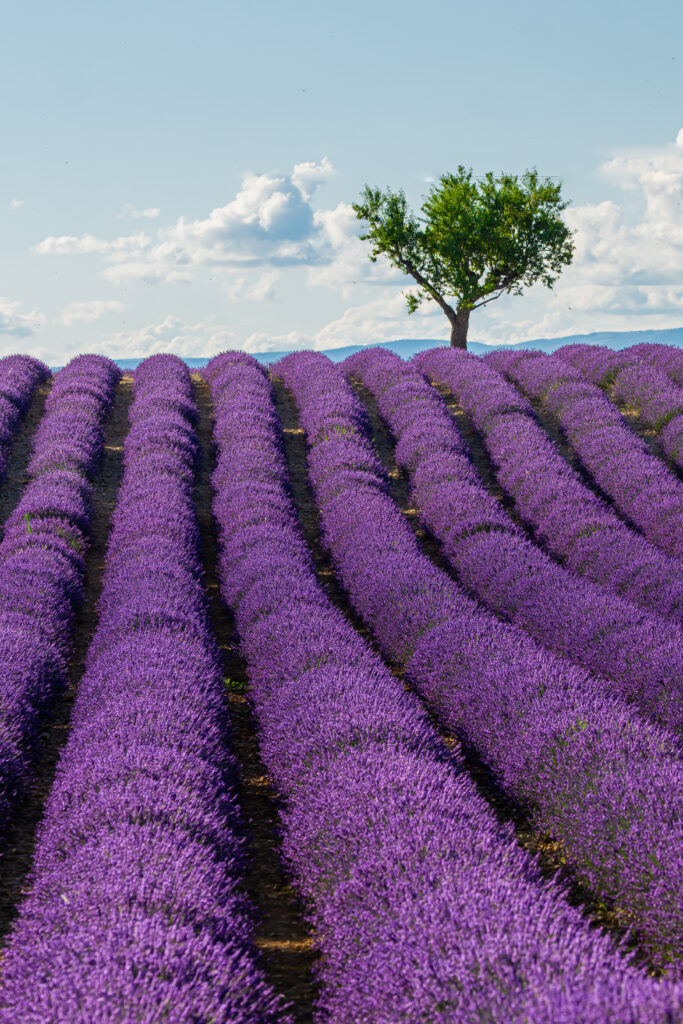
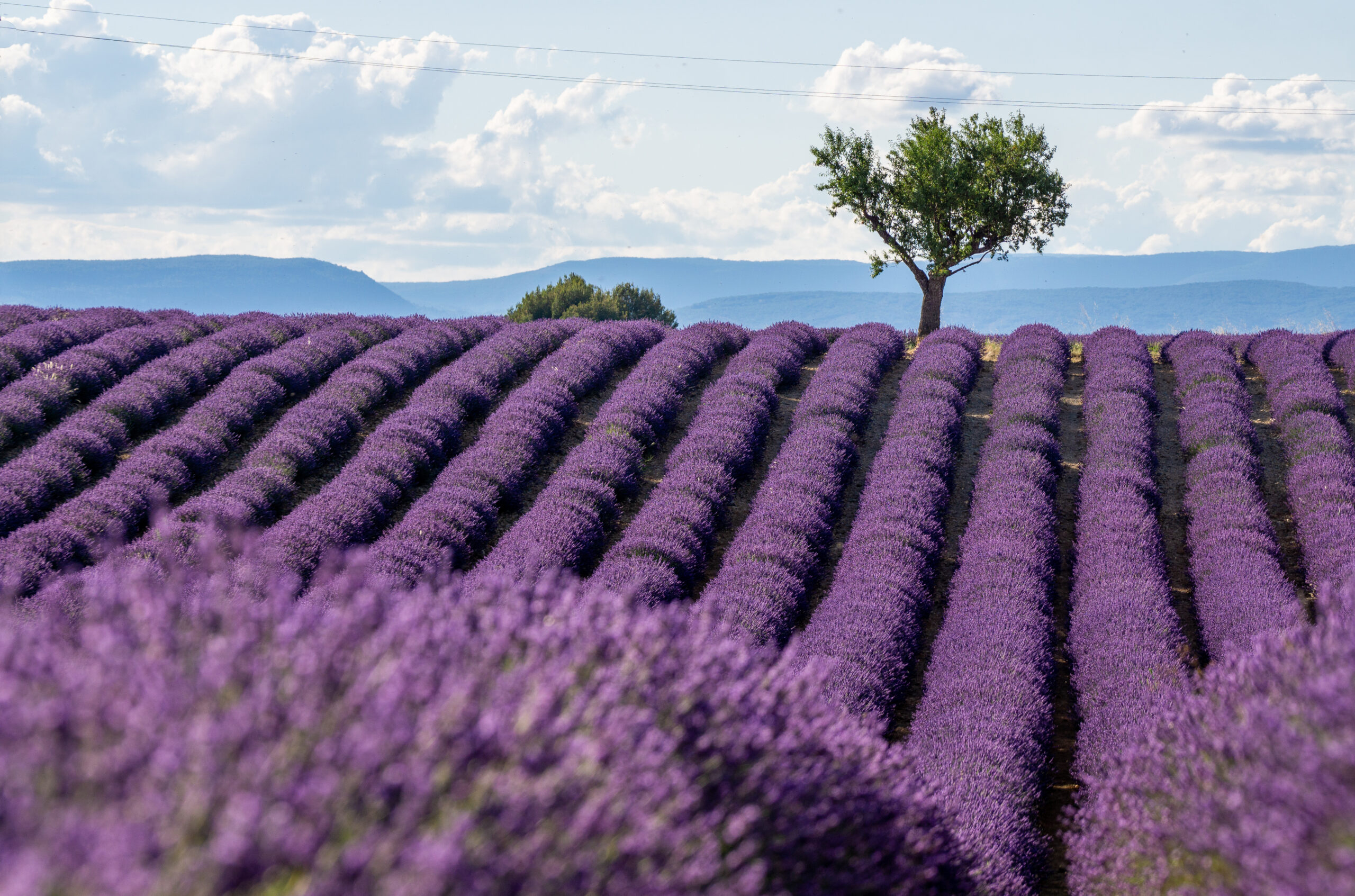
Opposite this car park is where you’ll find possibly the most photographed lavender field in Provence, with its iconic trees. You can go straight in for the ‘money-shot’ (I’d recommend carefully walking down one of the centre rows to get a photo without the hills in the background), or approach side-on for a different perspective.
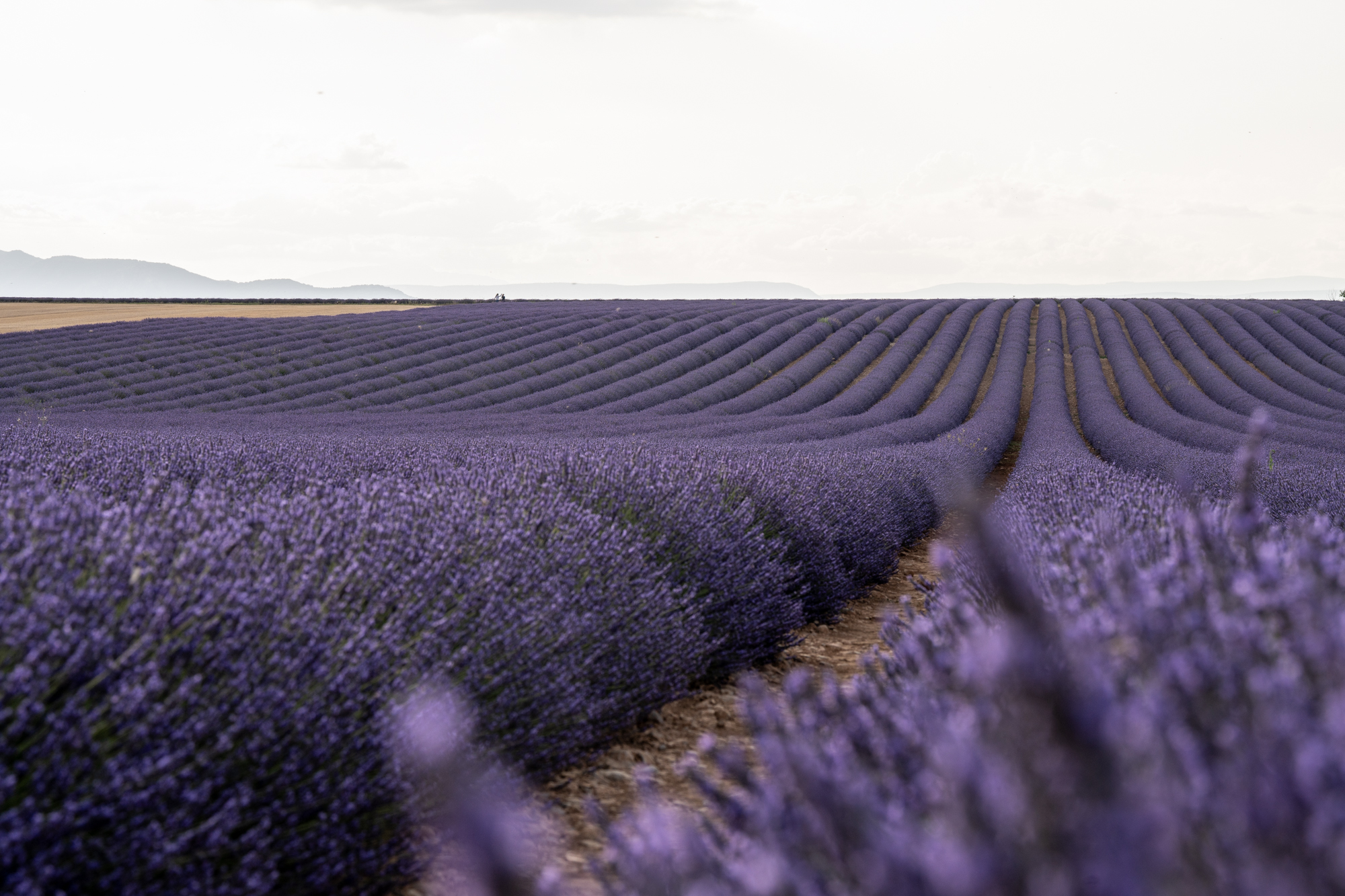
The fields here are expansive, so if you have the time, walk away from the crowds and play around with different compositions.
Pit Stop – Valensole Village
You can bypass Valensole and go straight through to the second half of the route, but I’d encourage at least a brief stop for a coffee or lavender-flavoured ice cream on your way. It’s a petite village, so a quick visit won’t take up too much of your time.
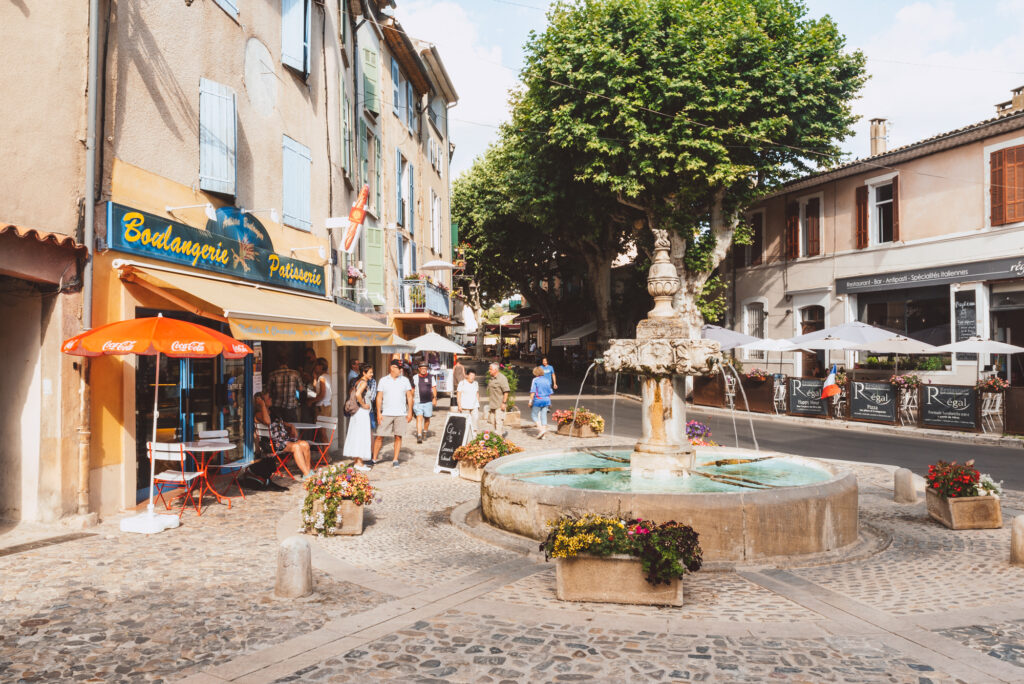
Park on Avenue Segond, or at the car park named “Parking Valensole” and wander down through Boulevard Frédéric Mistral. Here you’ll find boutiques, the very pretty town hall, a lovely fountain and an ancient washhouse.
Segment 2 – Valensole to Moustiers: The Heart of the Plateau (D56)
Route: Valensole -> Puimoisson -> Moustiers-Sainte-Marie
This is the most beautiful and varied stretch of the whole route, in my opinion. As you drive away from Valensole, towards Puimoisson, and then Moustiers-Sainte-Marie, the plateau opens up into rolling hills quilted with purple, ancient stone huts and crumbling buildings peeking above the rows, and only the odd lonely tree standing sentinel at the edge of a field.
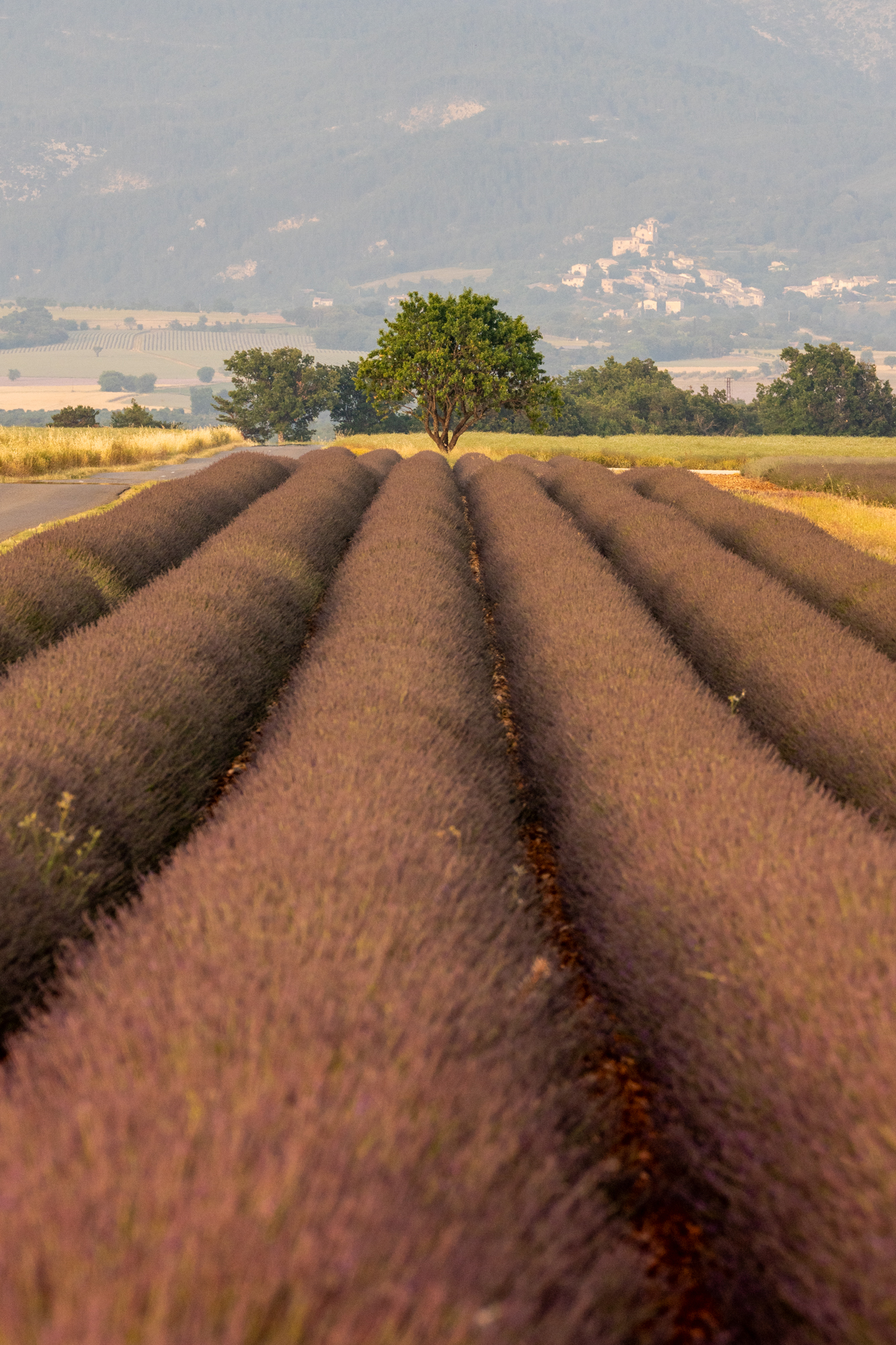
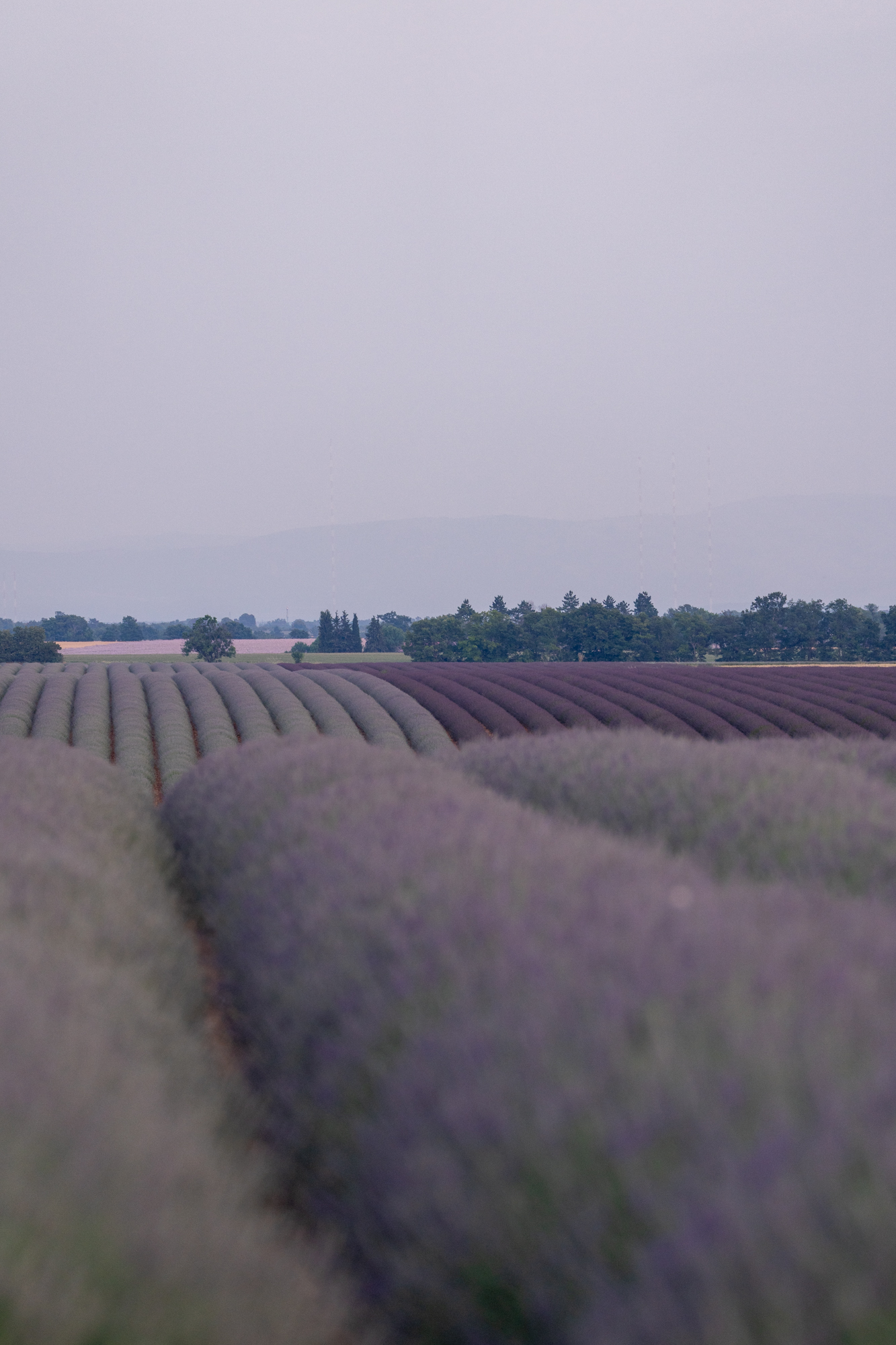
Unlike the D6 corridor near the distilleries, the roads in this section tend to be quieter – which means more room to wander, explore, and get unique compositions.
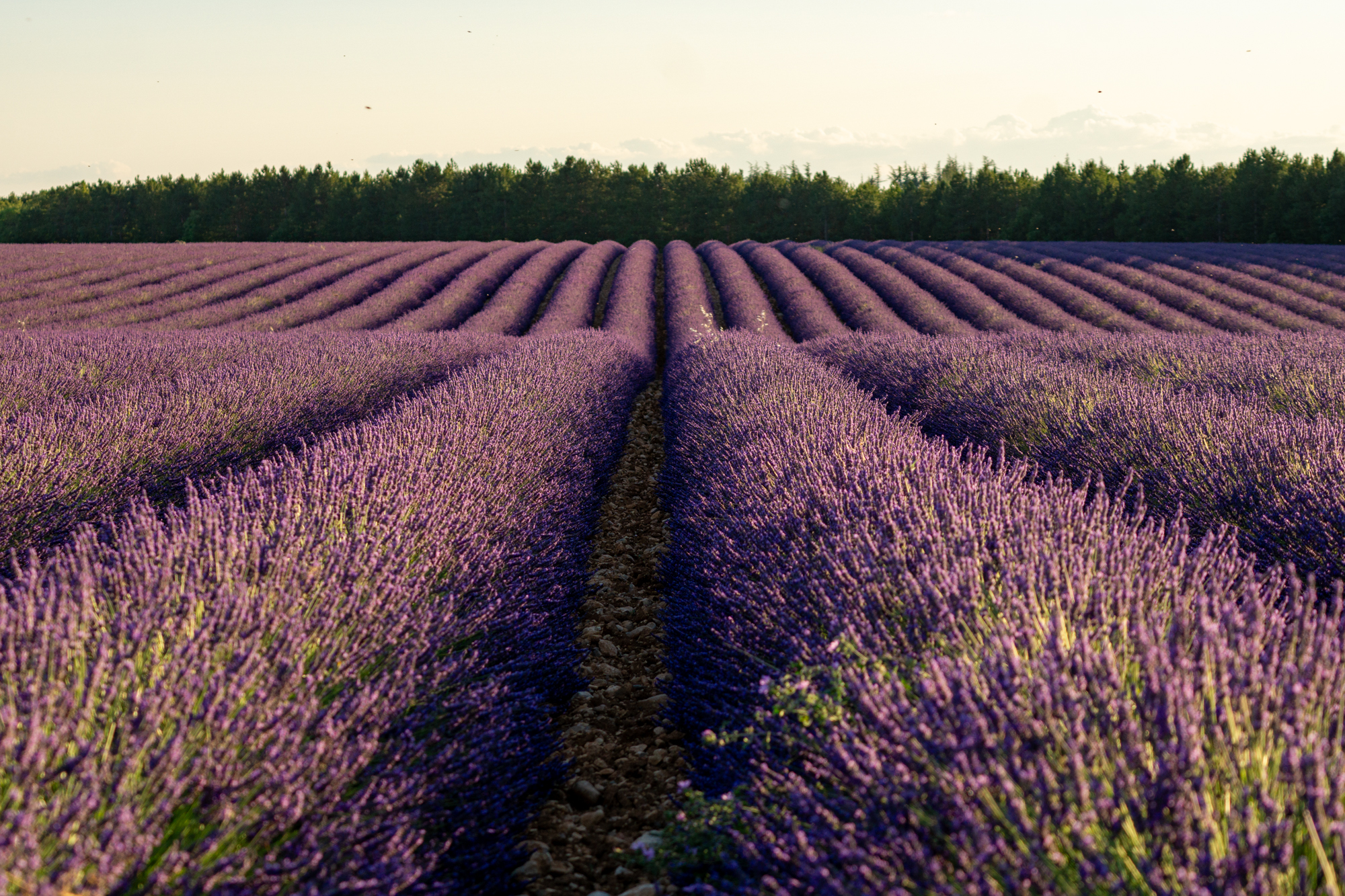
Take your time here, and look out for the following:
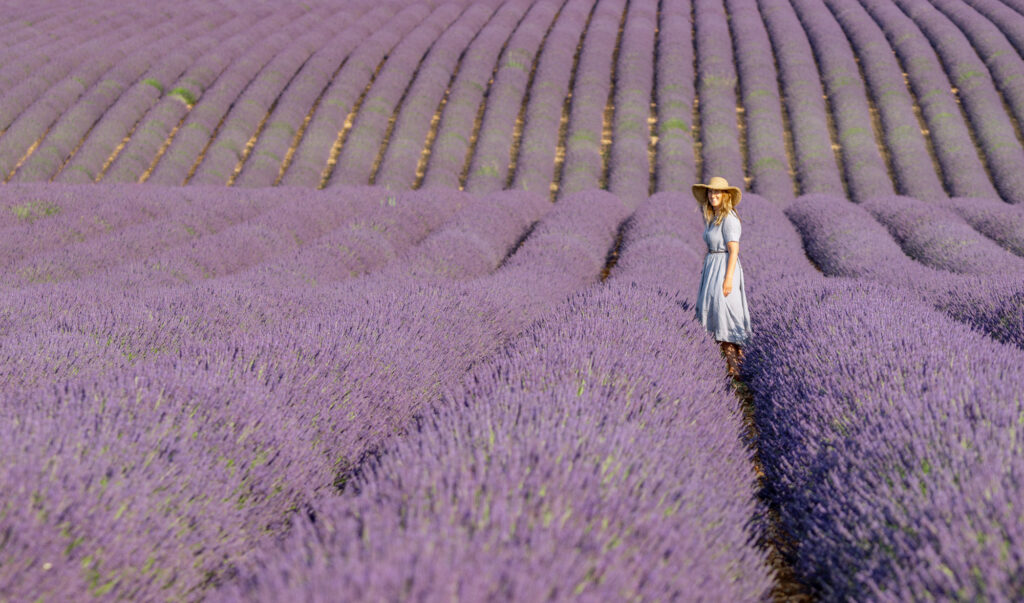
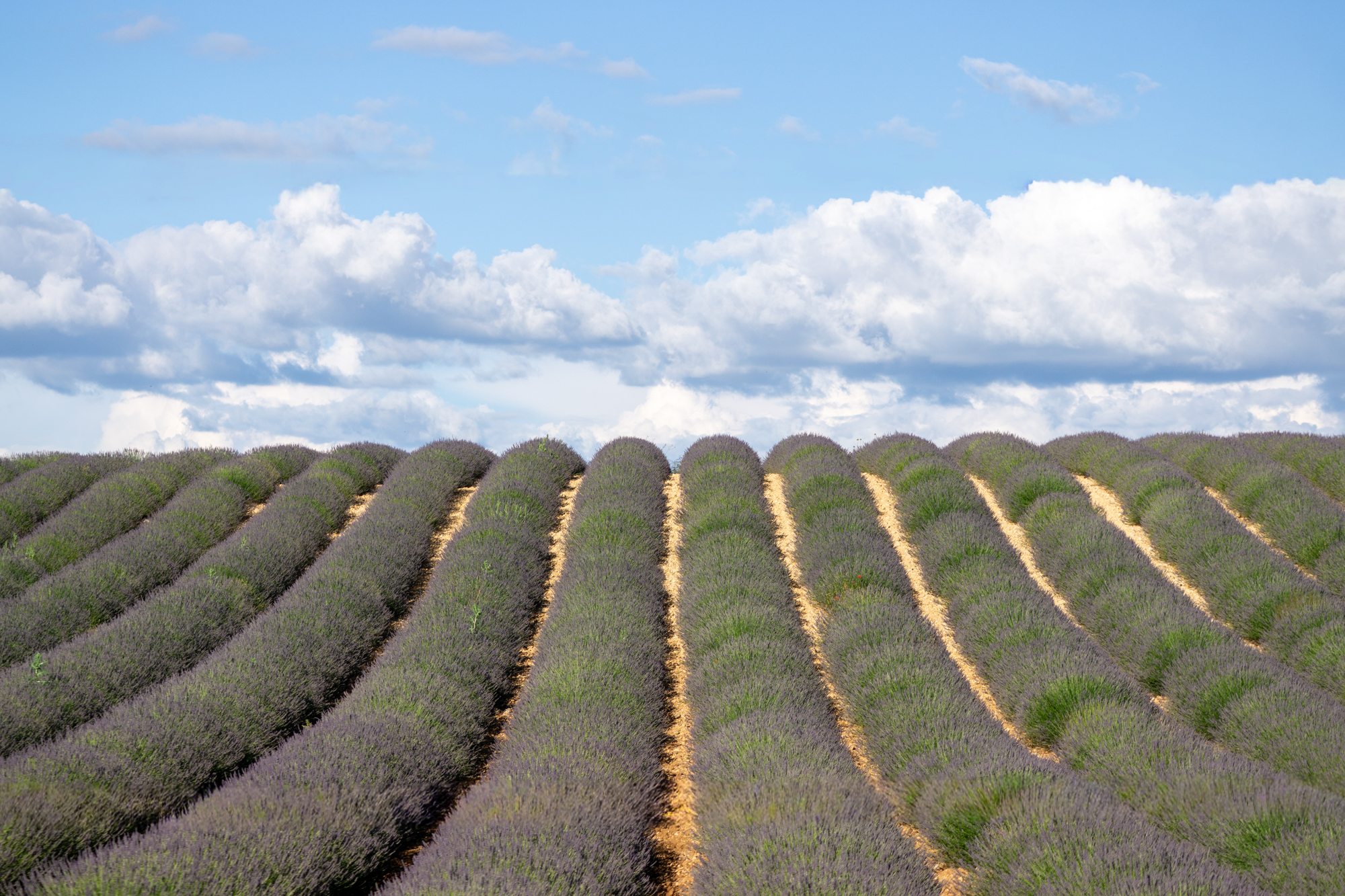
Sloping fields. The natural undulation of the plateau creates some beautiful inclines. The steeper ones are ideal for portraits against a backdrop of pure lavender; the gentler ones give you that sweeping landscape shot. The photo below was taken here.
Stone huts and bories. These ancient dry-stone huts are one of the most evocative features of a Provençal lavender field. They can add interest and dimension to your photographs.
One of the most famous huts is below (found here). Always a striking one to photograph – but last year when I visited, it was surrounded by clary sage instead of lavender, and I could therefore only catch a glimpse of its roof among the flowers.
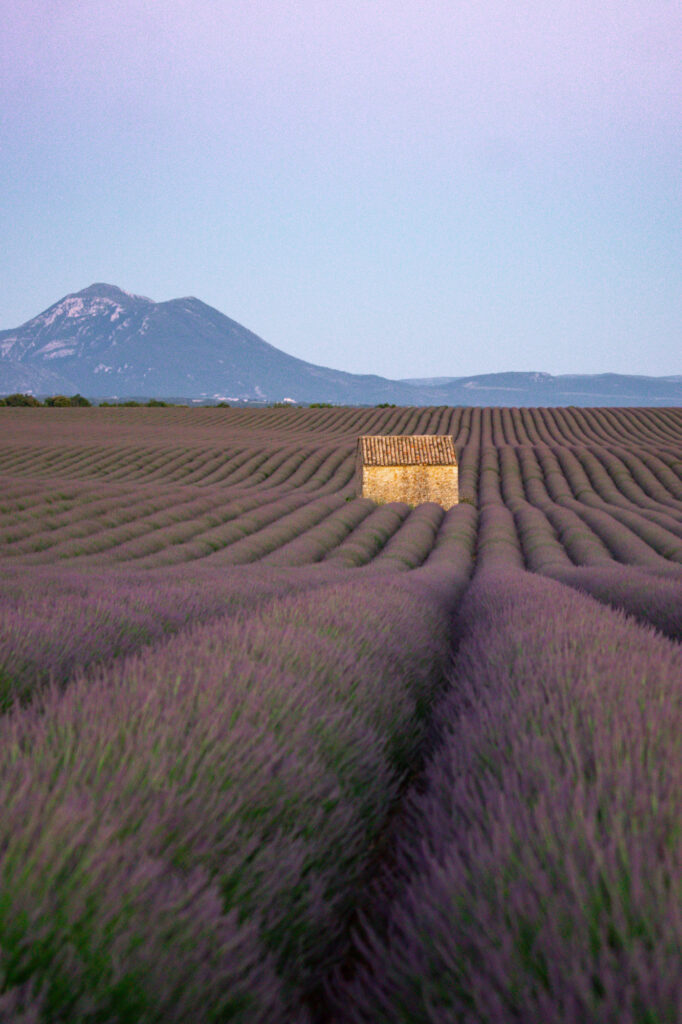
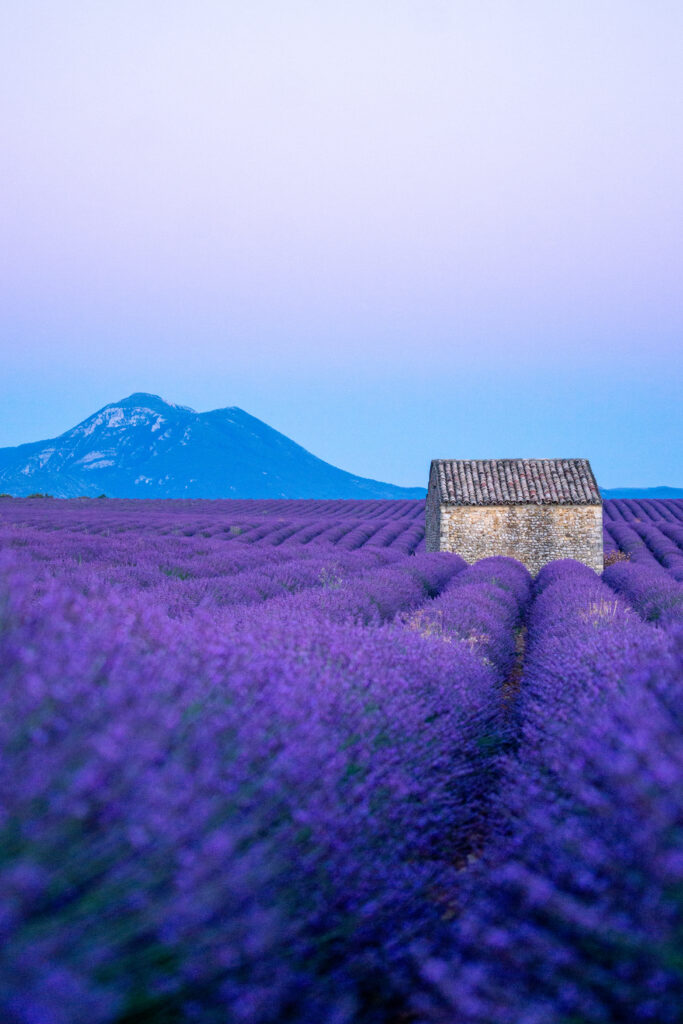
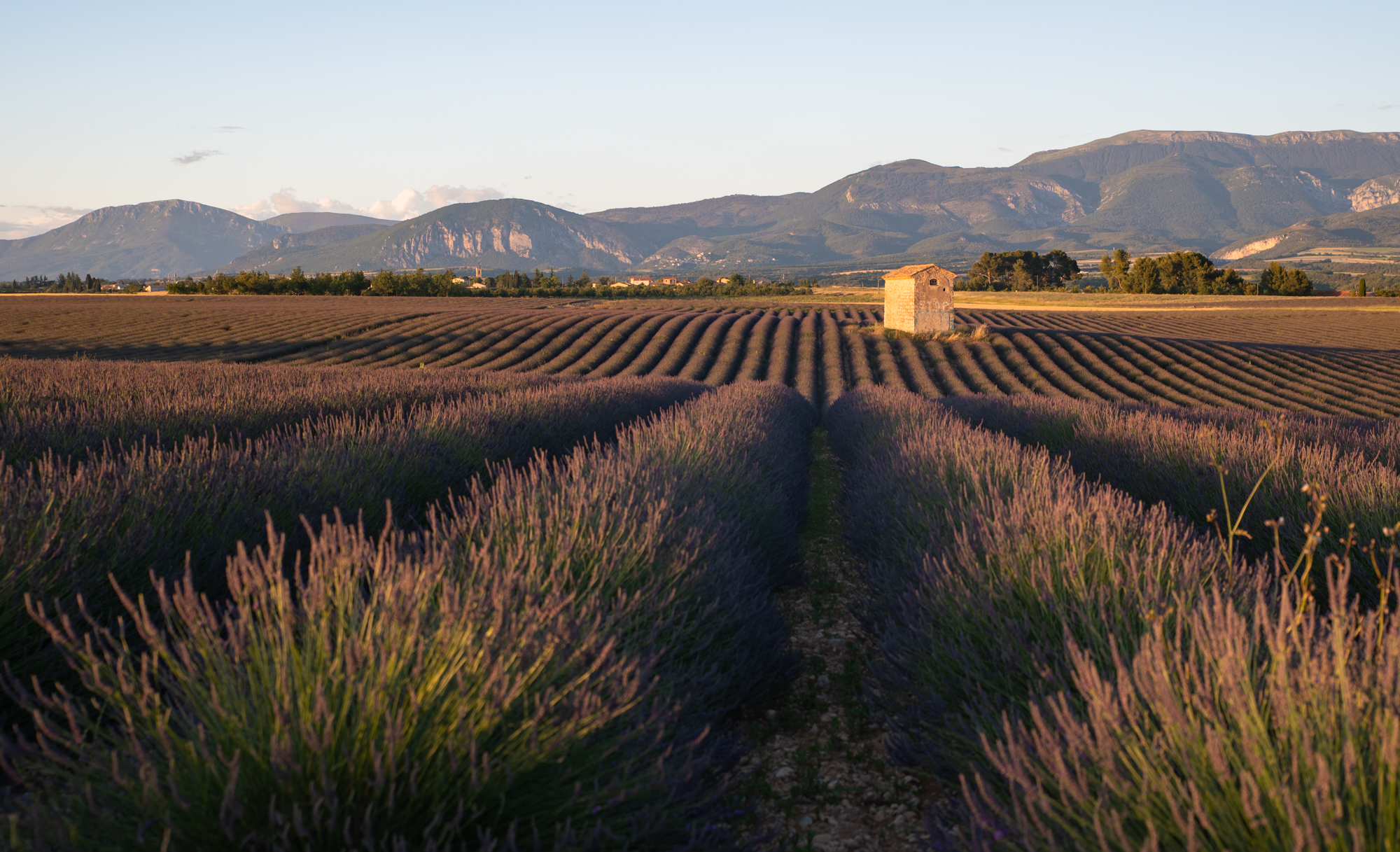
Another interesting hut along this route is found here (pictured below). Best visited during the day, as it can sink into the shadows fairly early during sunset.
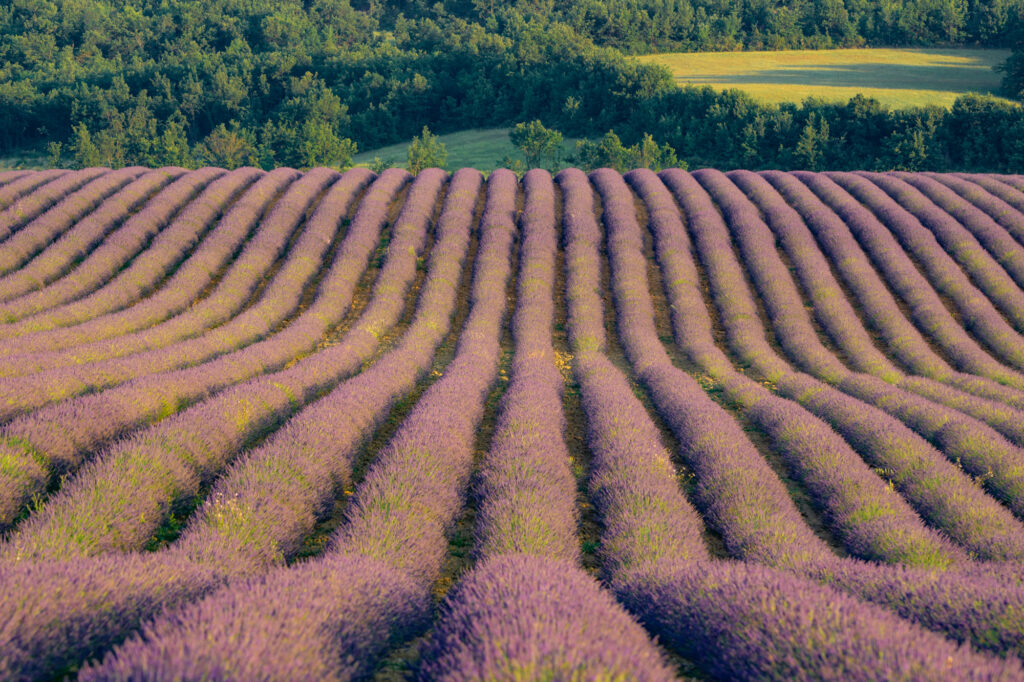
Quieter fields among the trees. Further along towards Moustiers, the landscape becomes lusher. Some of the prettiest fields can be found here, tucked between the vegetation, and giving a lovely contrast between the vivid purple flowers and the deep green bush.
There’s no need to rush this stretch; just take it easy and pull over when something catches your eye.
Pit Stop – Moustiers-Sainte-Marie
The charming cliffside village of Moustiers-Sainte-Marie wholeheartedly deserves a visit if you have the time. In fact, if you were splitting this route into two days, then this would make the perfect place to call it a day.
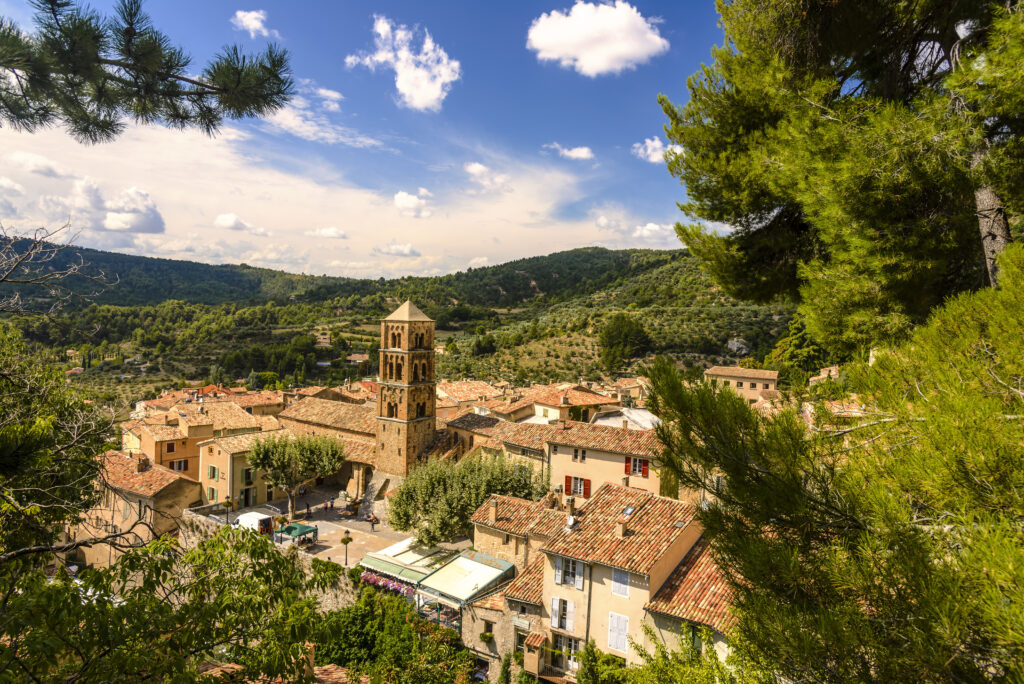
Explore the cobbled lanes of the old town, climb an ancient pathway up to the Notre Dame de Beauvoir Chapel, and delight in the elevated views across the Valensole Plateau as you shelter under giant cypress trees.
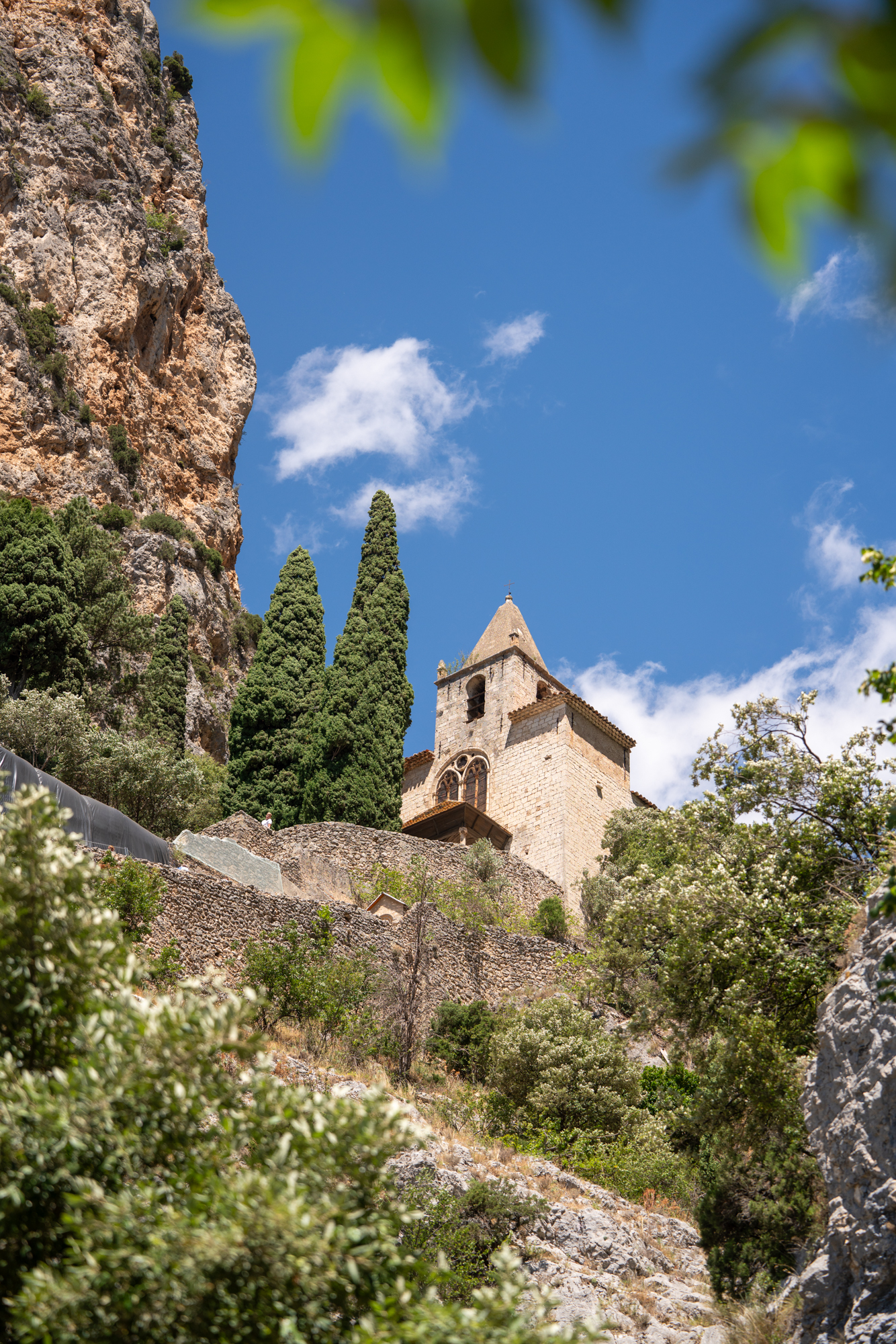
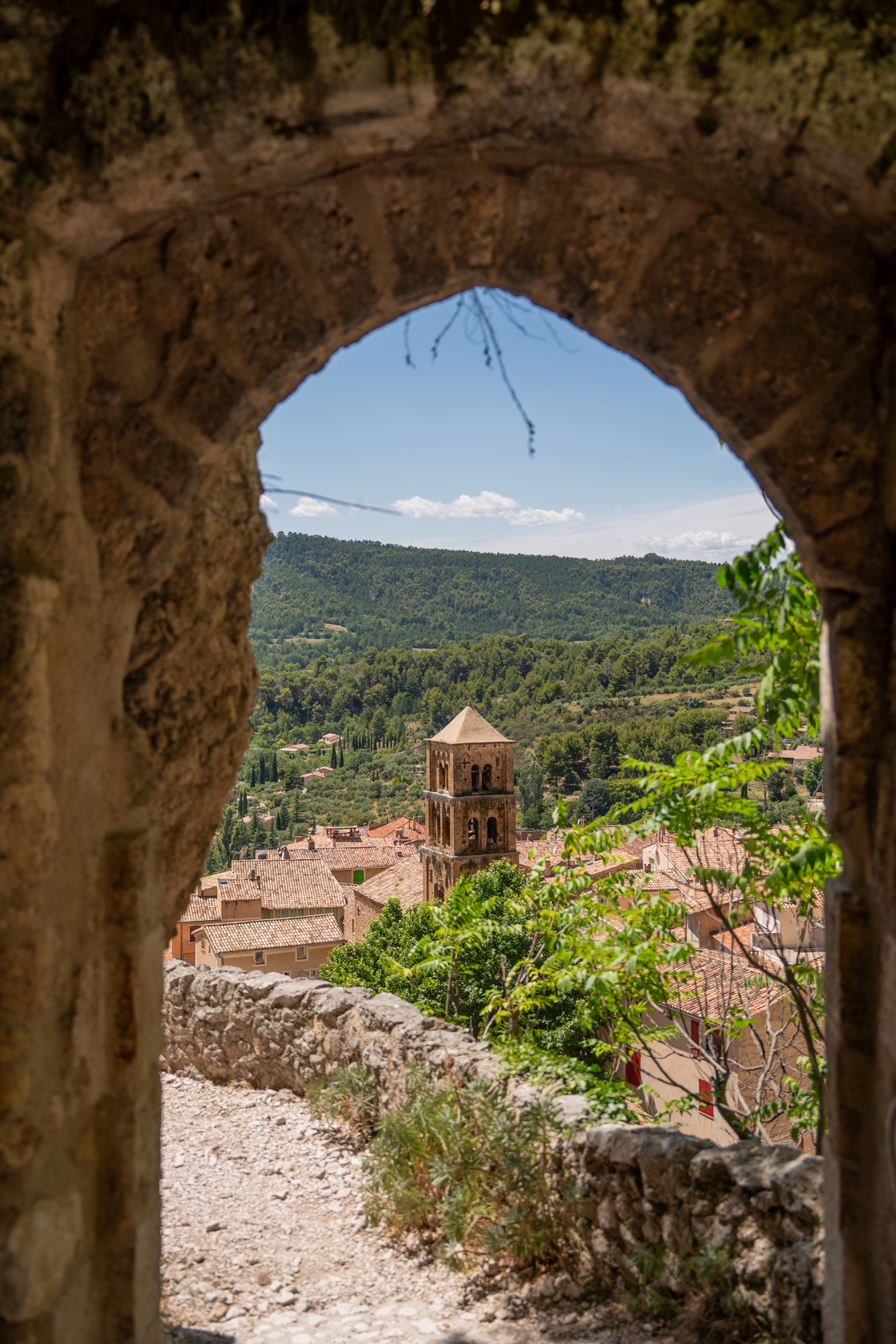
Stock up on faïence ceramics, the traditional earthenware the village is known for, and reward your sightseeing with some local Provence rosé on a café terrace.
Optional Side Trip – The Verdon Gorge and Lac de Sainte-Croix
I’d only add this in if you have more than a day to drive the whole route, or if you’re content to just see a few fields along the way, then spend the afternoon on the lake, which can be a great option in the heat of summer.
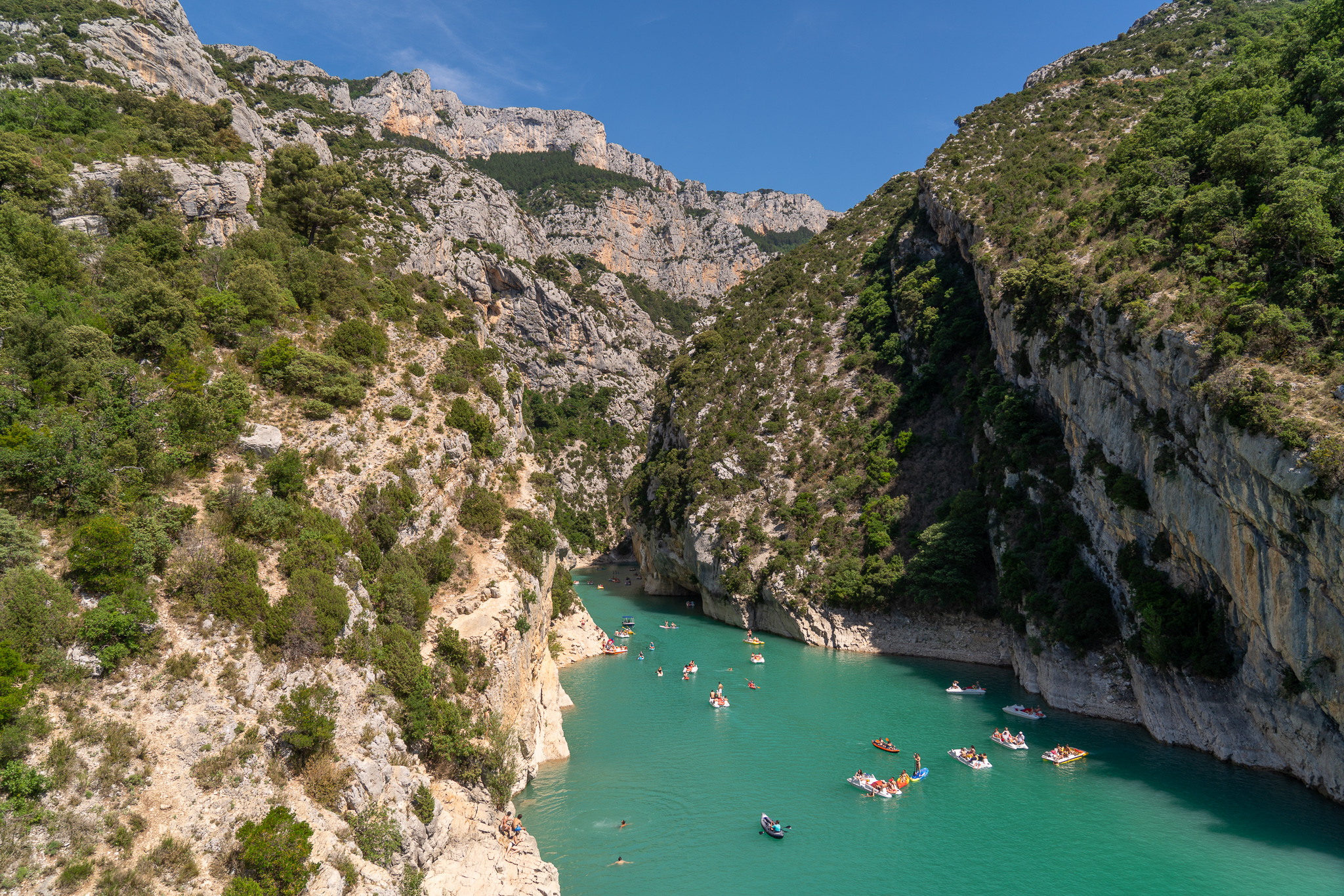
The Verdon Gorge is a short hop from Moustiers-Sainte-Marie. This spectacular natural attraction, dubbed the Grand Canyon of Europe, would be a shame to miss while you’re in the area.
The famous Pont du Galetas sits at the top of the lake, at the start of the gorge and offers the iconic viewpoint over the turquoise waters threading between dramatic limestone cliffs. It’s one of those scenes that genuinely takes your breath away.
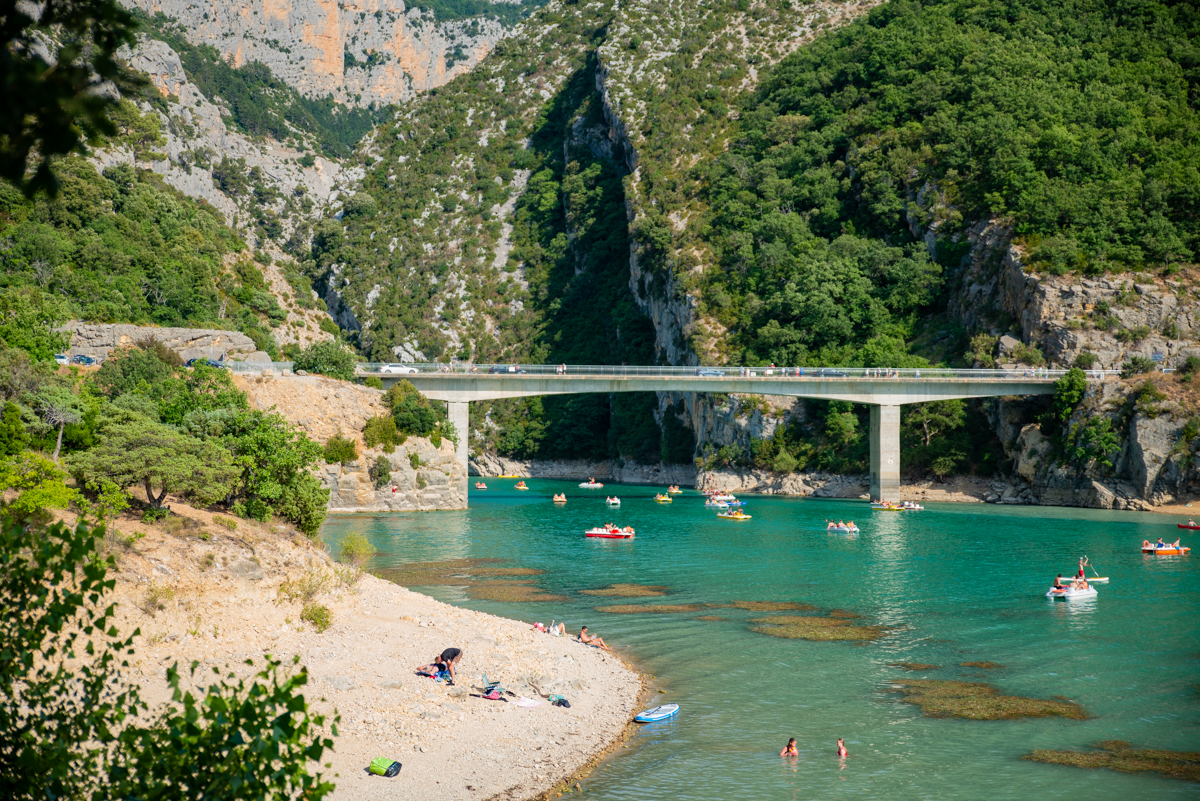
Beyond the gorge itself, the vast Lac de Sainte-Croix offers a completely different kind of afternoon. Hire an electric boat, or pedalo, and putt or pedal your way into the mouth of the gorge, swim from the lakes’ beaches, or simply sit on the bank with a picnic and enjoy the spectacle of everyone enjoying the water in their own way.
For a full guide to the gorge, including how and where to hire boats, and where to find the best viewpoints, you can read my complete Verdon Gorge Guide here.
Photo Stop – Viewpoint of Moustiers-Sainte-Marie
As you climb the Route de Sainte-Croix away from Moustiers-Sainte-Marie, keep your eye out for advantageous viewpoints, like this one.
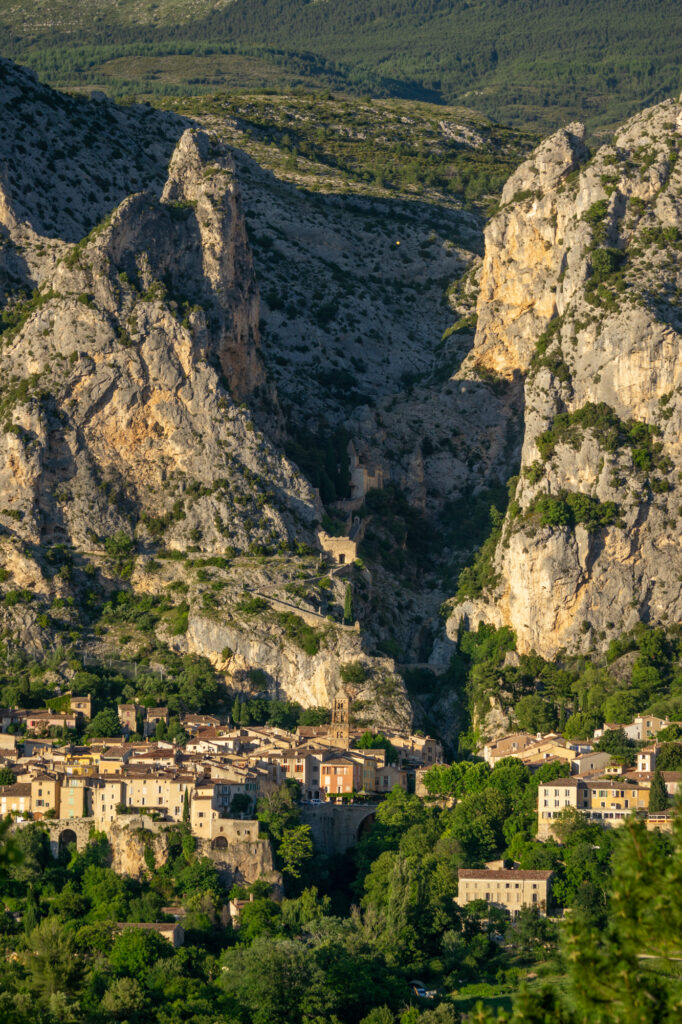
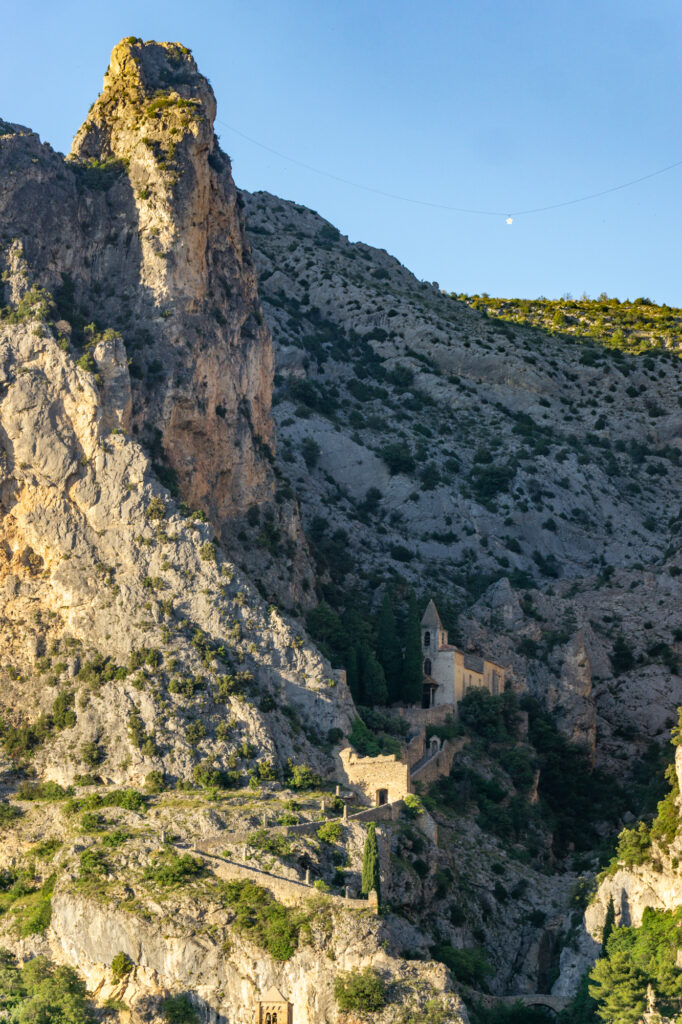
There are a few places where you can safely park your car to take in the gorgeous view of the village. And it’s an excellent way to appreciate the geography surrounding the town.
Keep an eye out for the Star of Moustiers shimmering in the sun as it lies suspended between the towering cliffs (can you spot it in the photos above?). The original meaning of the star has gotten lost throughout history, but it’s a symbol synonymous with the village nonetheless.
Segment 3 – Route de Moustiers to Sainte-Croix-du-Verdon
Route: Moustiers -> Orientation Table -> Riez
As you drive along the Route de Moustiers towards the village of Sainte-Croix du Verdon, you’ll pass many beautiful sights. There are plenty of lavender fields along this route, and I’d encourage you to discover them for yourself as you drive along.
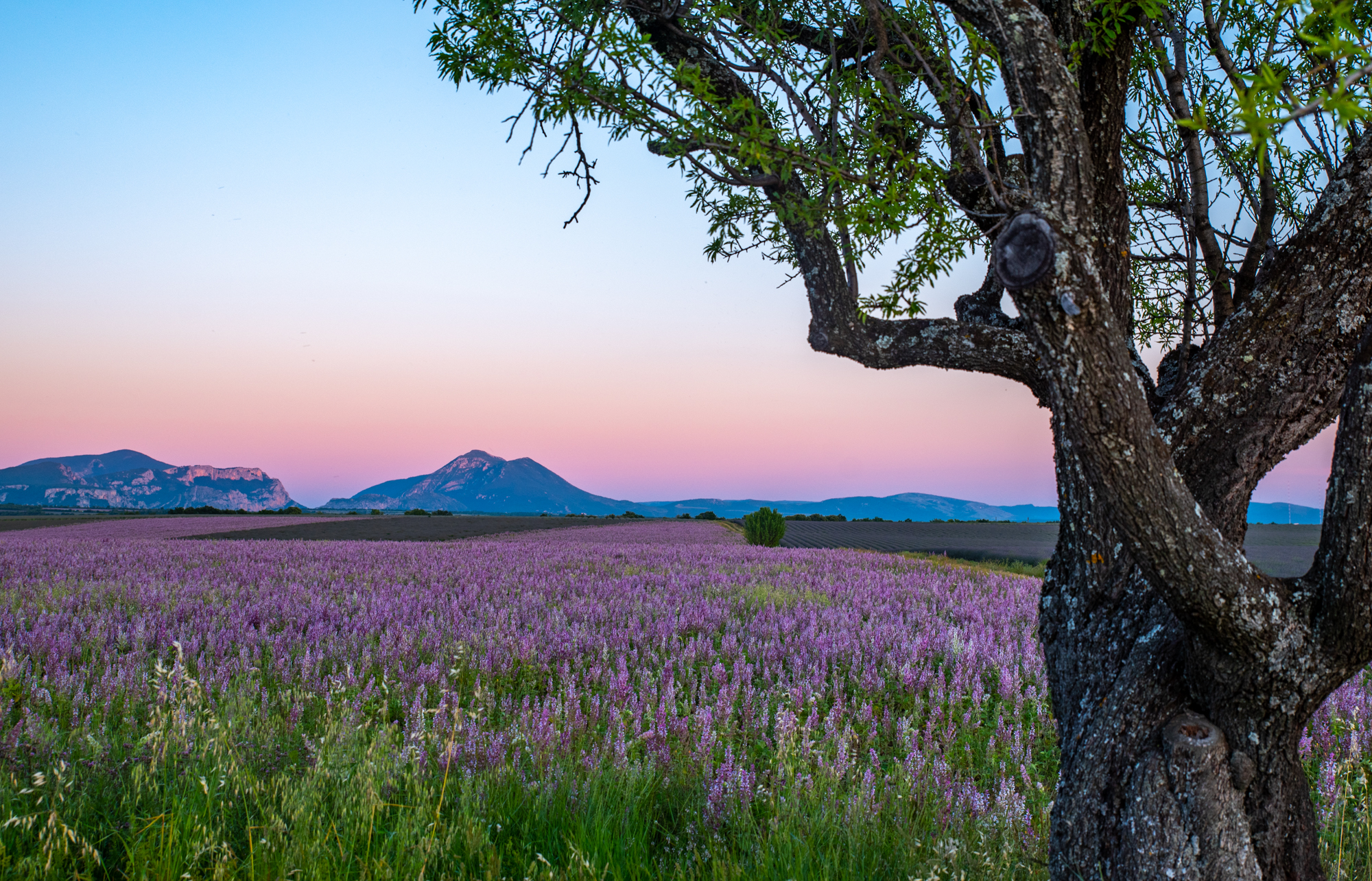
The lavender fields here are interspersed with flowering clary sage, which blooms in a lovely pale purple. And on the other side of the road, keep your eye out for stunning views over the Lac de Sainte-Croix.
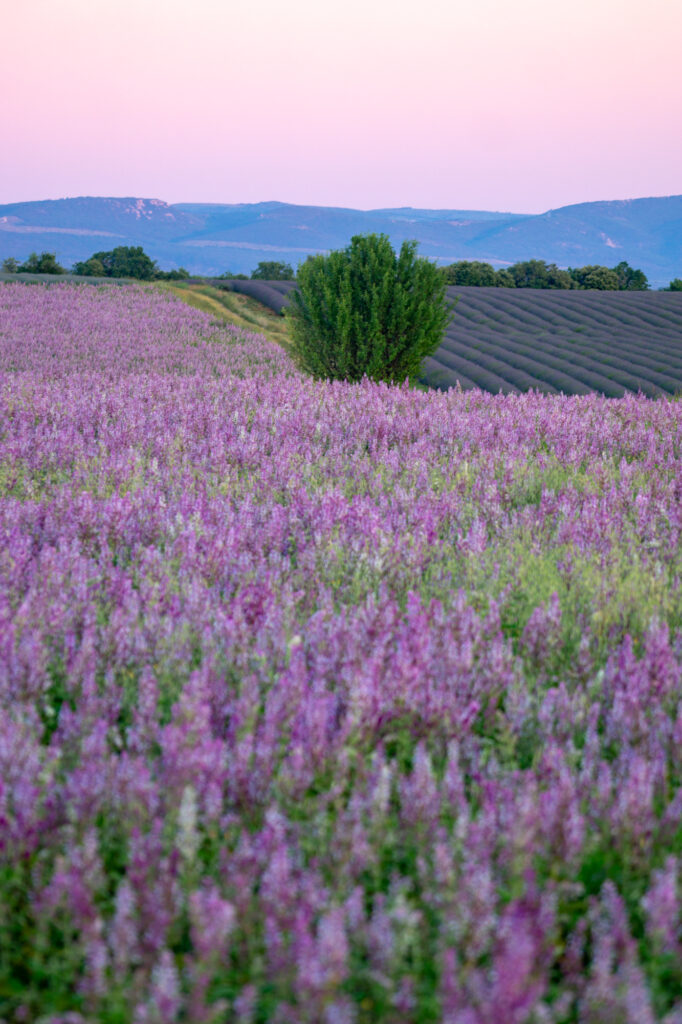
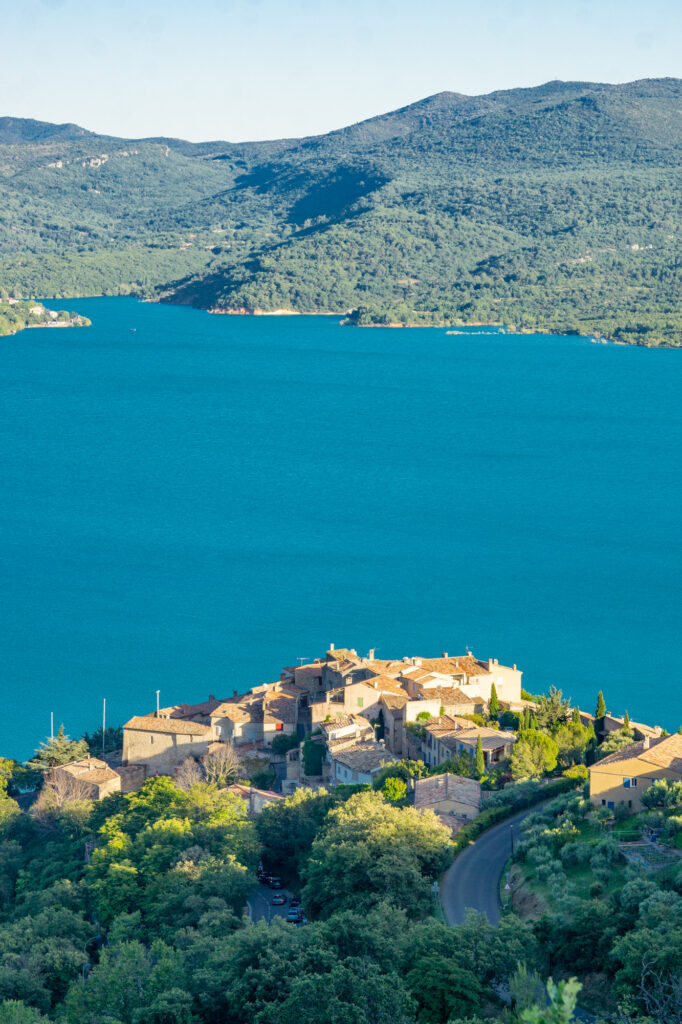
Nearing the end of this road, you’ll find a parking spot next to a lookout point (here) with an orientation table to get your bearings, and picnic tables to enjoy a rest. It’s a brilliant spot for lunch (if you didn’t detour to the gorge), with the glittering lake below.
Segment 4 – Return via Riez (D11 / D6)
Route: Sainte-Croix-du-Verdon -> Riez -> Back to Valensole
The final stretch of the route loops back via Riez, which can be the perfect pit stop for dinner. It passes through more open agricultural land, and the fields here offer a chance to get creative as they’re often quieter and feature old stone buildings among the flowers.
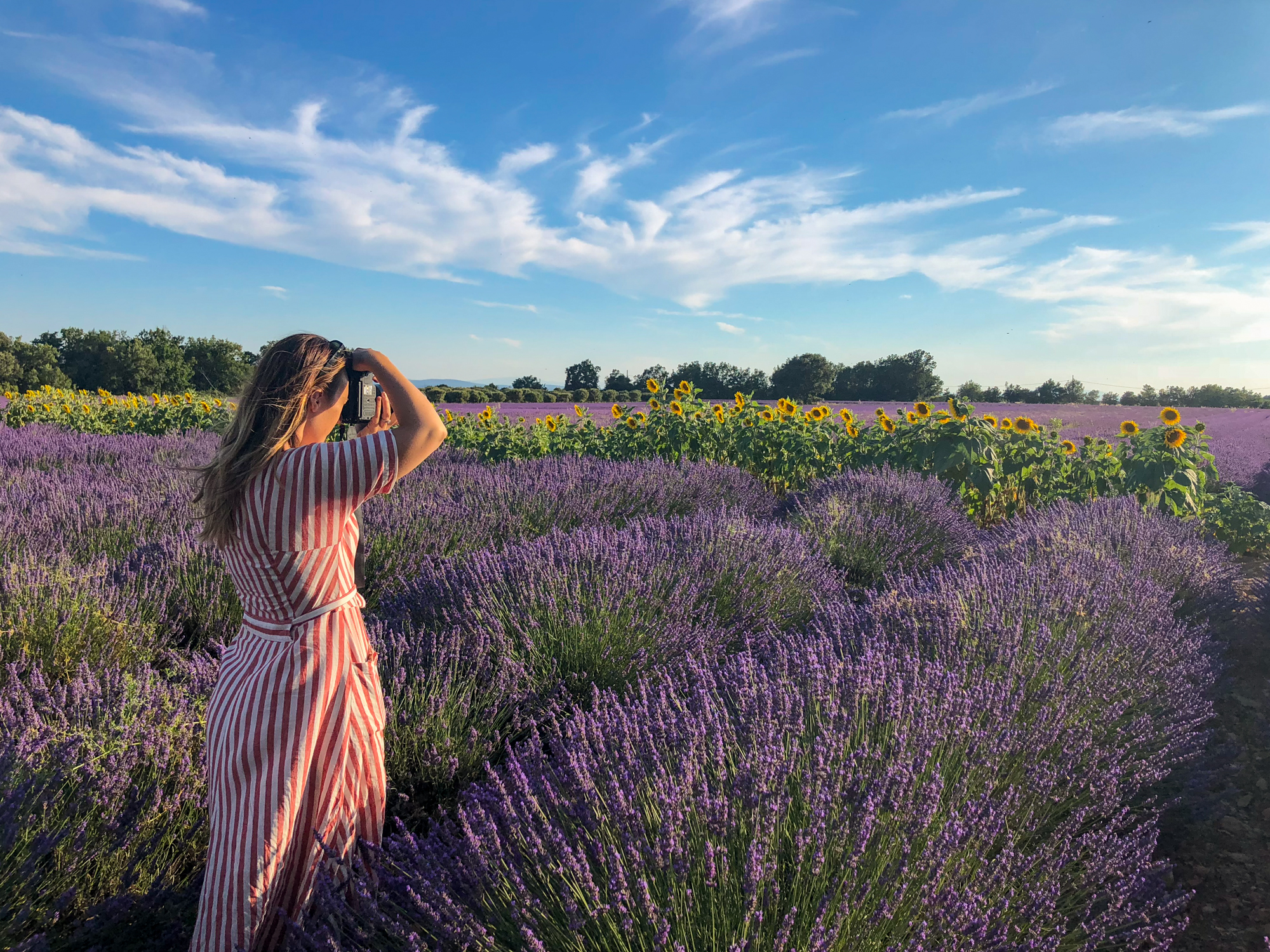
Head along the D11, through the Plateau de Quinson, and don’t be put off if the views feel less dramatic; a change of angle, a zoom, or focusing on the details within the fields can result in interesting photos. Plus, if you wanted a more discreet area to take some family photographs, it’s rare that you’ll find many other people here.
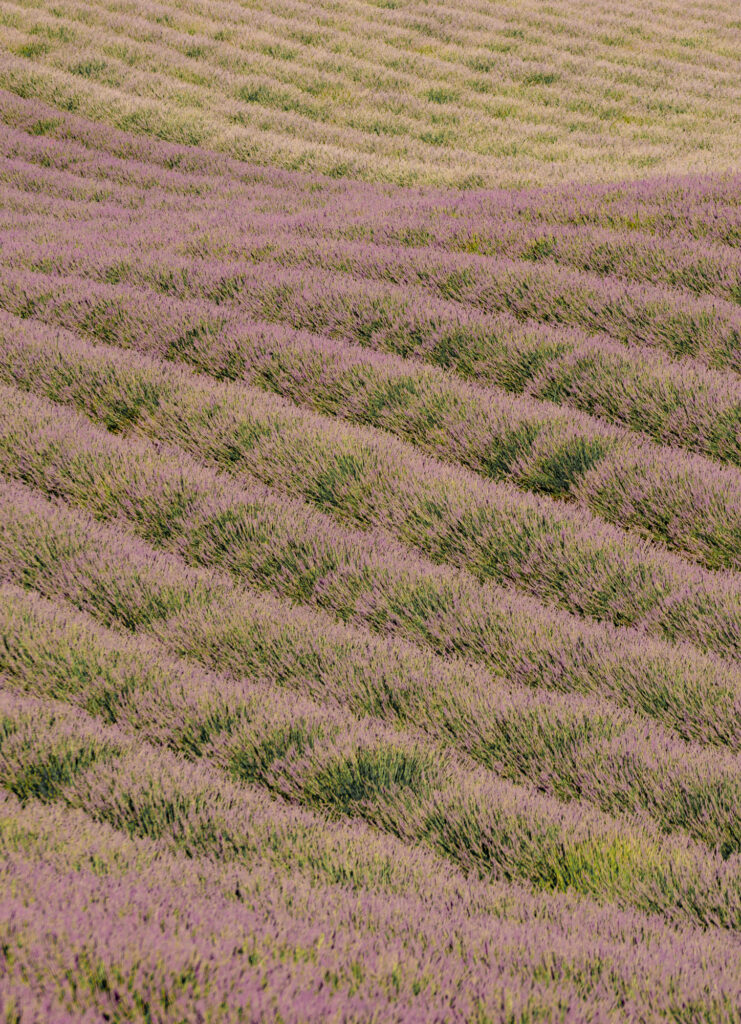
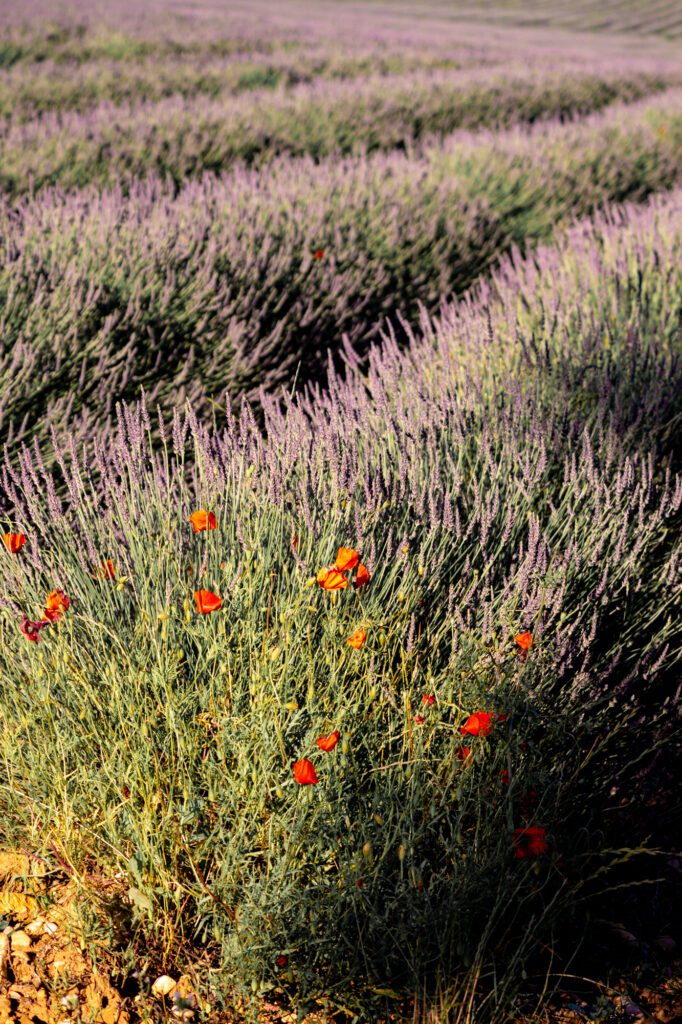
After you pass through Riez, on the way back to Valensole, the rolling hills of the plateau make one last impression. There are some wonderful lavender fields here that are very worthy of a stop if you still have time.
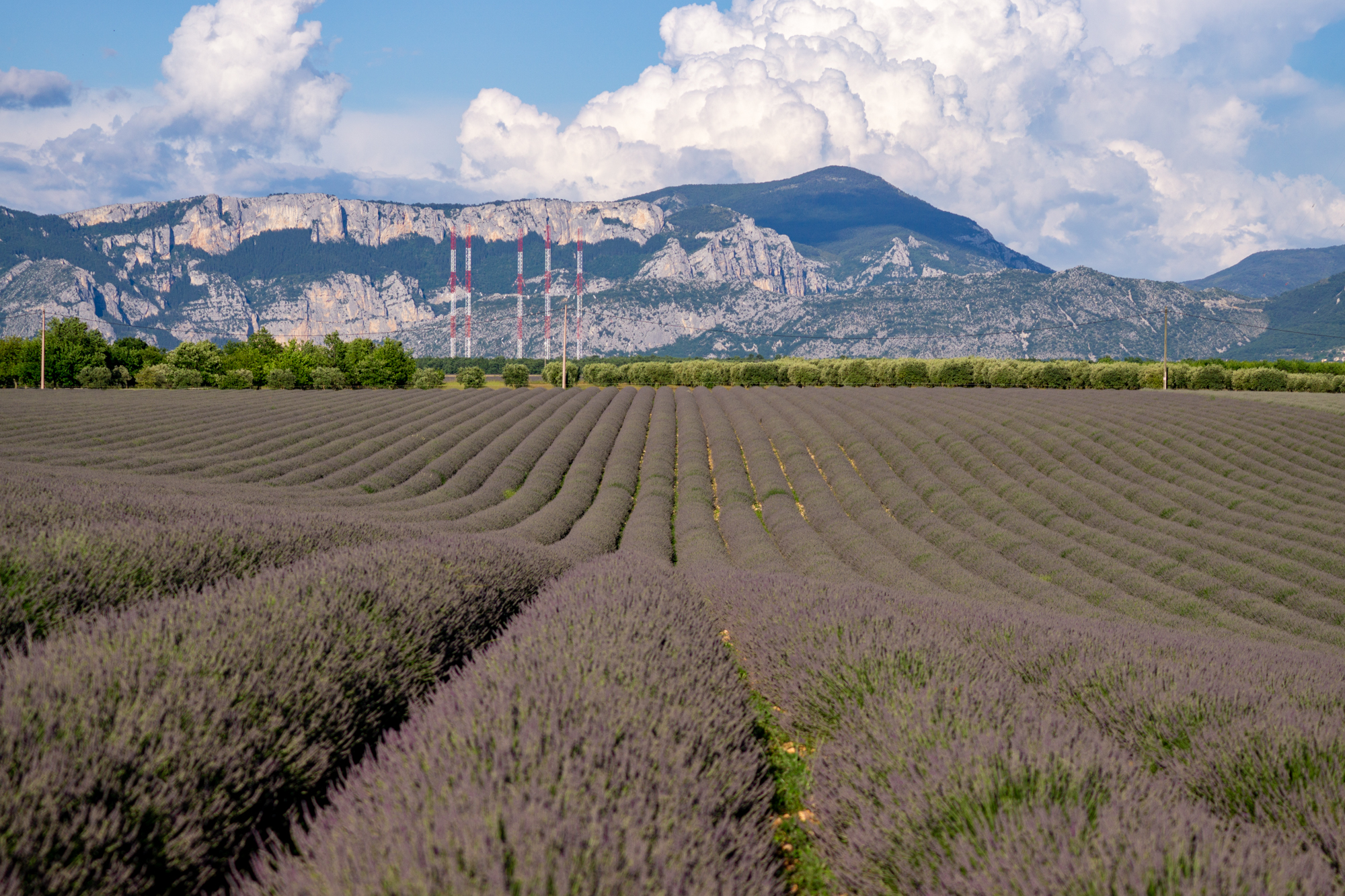
They’re expansive, there are several stone huts in the area, and you have a wonderful undulation in the ground to give your photos texture. The photo below was taken around here (at the start of the season).
Completing the Route
That concludes the Valensole lavender circuit! This isn’t a rigid checklist, but rather a tried-and-tested framework for exploration. The best version of this drive is one where you follow your instincts, pull over on a whim, and leave room for discovery and diversions along the way.
If you plan on completing this route in one day, I’d suggest starting early so you’ll have time to take in the villages and views as you go. But if you are on a shorter time frame (perhaps visiting as a day trip from Nice), it’s possible to drive the core lavender sections (and have time for photographs) in around 4 hours.
Tips for Your Valensole Lavender Visit
A note on etiquette: these are working farms, not public gardens. Please respect any signs asking you not to enter, never tread on the lavender plants as you move through the rows, and never pick the flowers. For the farmers of the Valensole Plateau, this is their livelihood – treat it accordingly.
- The lavender around the Valensole plateau normally blooms between mid-June and mid-July, but it can change year on year. Your best bet is to come in the last week of June or the first week of July. The farmers generally start harvesting in the second week of July, but I have seen it being cut earlier!
- Read more about the Provence lavender season and timing here.
- Remember that the lavender fields are in constant motion. Fields that look beautiful one year may be neglected and overgrown the next, or even replaced with another crop!
- The best time for photographs is early morning or early evening. So if photography is your main mission, consider staying in Valensole among the fields! You can find my recommendations here.
- There isn’t any shelter in the lavender fields, so be sure to wear a hat and sunscreen to protect yourself from the sun.
- Bring plenty of water and a picnic to enjoy. Even if you’re planning on visiting the villages on this Valensole lavender fields itinerary, you’ll struggle to find somewhere to eat outside of regular meal times.
- The Valensole lavender festival takes place around the 3rd Sunday of July each year.
- Check out this post for other lavender routes in Provence.

Note: All photographs in this guide were taken by me, over many years of visiting the Valensole Plateau at different times of day and at different points in the lavender season. If you notice the lavender looking fuller and more purple in some shots than others, or the light shifting from golden to harsh and back again, that’s why. No two visits are ever quite the same, which is why I keep returning!
Pin this for later!

I drove your suggested Valensole Plateau lavender route 7/6/2020. The GPS coordinates made it so easy. Thanks for a lovely itinerary! 💜🌻
Thank you so much for this thoughtful itinerary! I’m absolutely going to do it this year. I appreciate the time you put into it.
Excellent detailed info! Will definitely use this as my guide when ready to travel. Can’t wait!
Hey!
Thank you for the information!
There is still blossom at this time of the year?
🙏🏻
No, I’m afraid it was harvested in July.
Is it still ok to visit around 17th June or is it better later? Thanks
Later is better typically. Last week of June – early July.
What a great article! Thank you for sharing. Do you know if the lavender this year will bloom earlier or later? Coming from California, what’s the best time to visit? Mid July or early July? Thank you!
Hi, although it’s too early to tell for this year, I’d always say early July is the ideal time.
Would you say this route is recommended for a full-day trip? Or perhaps would be better spread out over several days?
Hi there, you can absolutely drive this in one day. Or if you want to take your time in the villages, you could do it over two.
Hello What a great service you have done for nature lovers….brilliant blog
Can I expect to see lavendar in Valensole on dates like 16/17/18 august this year 2022…can you help in letting me know if they are there when I reach Cannes
Hi there, unfortunately, by mid-August normally everything has been harvested already.
Hi There! This artical is AMAZING and my blueprint for our trip, thank you for the effort and time put into this🙏
We are planning to do this route 28Jun – 1 Jul 2024. Would there be a big difference in the colour between then and later in July? We can move the date on, but only a few days at most and it won’t be ideal for the rest of the trip, but if it will make a big difference, I’d rather do it.
Thank you!
Hello, those dates sound pretty ideal actually 🙂
Thank you for this informative article.
I am planning to visit valensole on 21 July.
will it be too late?
So the Valensole lavender festival is on the 21st July this year, so in any case, that could be a fun time to visit the region! Expect most of the fields to have been harvested by then, but they usually leave a couple near the lavender distilleries as to appeal to visitors…